

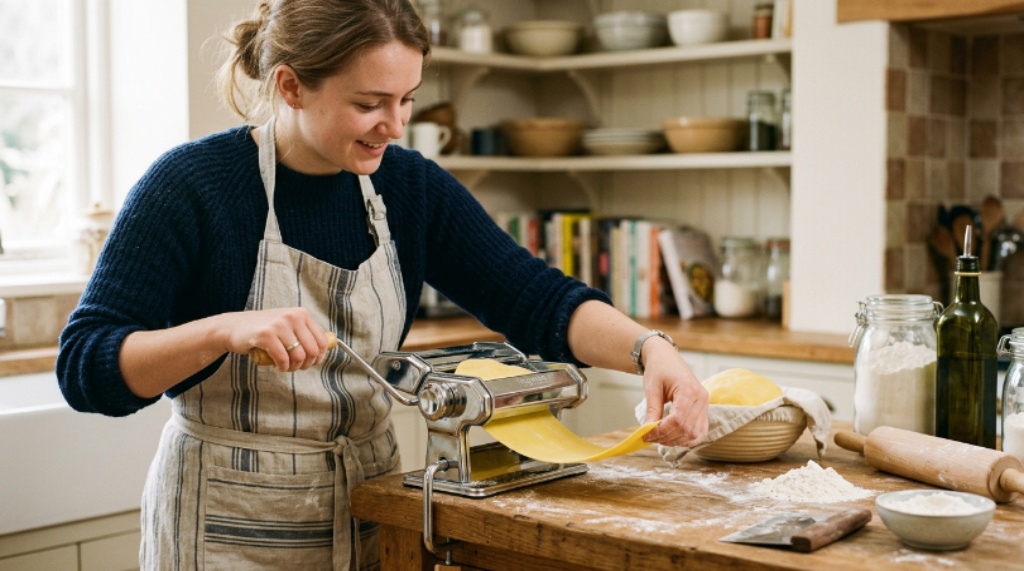
Making pasta at home is one of the most satisfying kitchen skills you can learn. There is something special about rolling dough into thin, silky sheets and cutting them into perfect noodles. If you are just starting out, a manual hand-crank pasta maker is the best place to begin. These tools are affordable, simple to use, and built to last for years.
This guide will walk you through everything you need to know. You will learn what makes a good pasta maker, which features matter most, and which models stand out in 2026. By the end, you will feel confident choosing the right tool for your kitchen.
Why Choose a Manual Pasta Maker?
A manual pasta maker gives you full control over your dough. You decide the speed, the pressure, and the thickness. This is especially helpful when you are still learning how pasta dough behaves.
Electric models are faster, but they can be costly and harder to clean. A traditional pasta machine, on the other hand, is straightforward. It has fewer parts, which means fewer things that can go wrong. Additionally, hand-crank models are much quieter, making them ideal for small kitchens or shared spaces.
Many beginners also find that using a hand-crank machine builds a deeper connection with the cooking process. You feel the dough respond under your hands. That tactile feedback helps you become a better pasta maker over time.
What to Look For Before You Buy
Not all pasta makers are created equal. Here are the key features to consider before making a purchase.
Thickness Settings: A good pasta maker should offer at least six to nine thickness settings. This range lets you make everything from thick pappardelle to paper-thin pasta for lasagne sheets.
Build Quality: Look for machines made from chrome-plated steel or stainless steel. These materials resist rust, clean up easily, and hold their shape after repeated use. Avoid plastic rollers, as they can crack over time.
Stability: The clamp that attaches the machine to your counter matters more than you might think. A wobbly machine makes it hard to feed dough through evenly. Choose a model with a strong, wide-base clamp.
Attachments: Many pasta makers come with a basic flat roller and a few cutting attachments. Common options include spaghetti and fettuccine cutters. Some brands sell additional attachments separately, so check whether accessories are available before you commit to a brand.
Easy Cleaning: Pasta dough can dry quickly and stick to surfaces. A machine with smooth, removable parts will save you a lot of frustration. Never submerge a pasta maker in water. Instead, use a dry brush or a slightly damp cloth to clean between uses.
Top Manual Hand-Crank Pasta Makers for Beginners in 2026
Marcato Atlas 150
The Marcato Atlas 150 is widely regarded as the gold standard for home pasta making. It is made in Italy from chrome-plated steel and offers ten thickness settings. The machine is sturdy, smooth to operate, and comes with a spaghetti and fettuccine cutter included.
What makes it ideal for beginners is its consistent rolling action. The dough feeds through evenly every time. Therefore, you get uniform sheets without needing much practice. Marcato also sells over a dozen additional attachments, which means the machine can grow with your skills.
The Atlas 150 is a true kitchen pasta roller in every sense. It handles all types of pasta dough, including egg-based, semolina, and whole wheat. The price sits in the mid-range, making it excellent value for a quality machine.
Imperia Pasta Presto
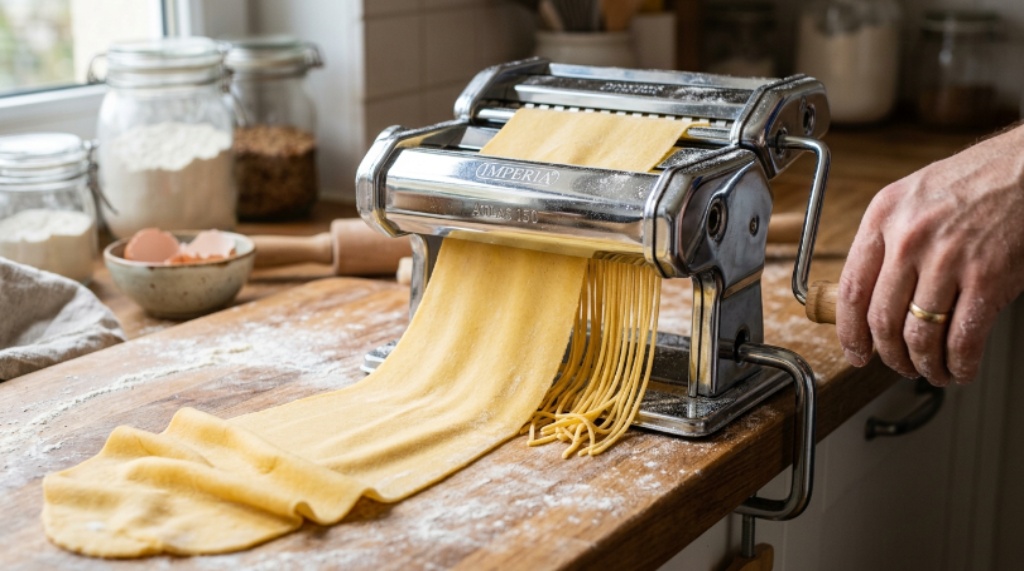
The Imperia Pasta Presto is another Italian classic that beginners love. It features a solid chrome-plated body and six thickness settings. The machine comes with two cutting attachments and a motor adapter port, which is useful if you ever want to upgrade to motorized operation later.
The crank handle is comfortable and easy to turn, even for those who have never used a pasta maker before. Additionally, the clamp system is among the most secure on the market. You will not feel any wobble during use.
However, some users note that the thinnest setting on the Imperia is not quite as thin as the Marcato. For most beginner recipes, though, this will not be an issue.
CucinaPro Pasta Maker
The CucinaPro Pasta Maker is a popular choice for budget-conscious beginners. It offers six thickness settings and comes with two standard cutting attachments. The chrome finish is clean and durable, and the machine is easy to set up right out of the box.
This model is a solid entry point if you are not yet ready to invest heavily. It produces reliable results for everyday pasta shapes. Furthermore, replacement parts are widely available, which adds long-term value.
The CucinaPro is not as refined as the Marcato or Imperia, but it does the job well. For anyone who wants to try home pasta making without a large upfront cost, it is a smart starting choice.
Gourmia GPS200 Manual Pasta Maker
Gourmia has made a name for itself in kitchen appliances, and its manual pasta maker holds its own against European competitors. It features eight thickness settings and a very stable suction-base design rather than a traditional clamp. This makes it ideal for kitchens with thick countertops where clamps might not fit well.
The rolling action is smooth, and the machine comes with three cutting attachments. This gives beginners more variety from day one. However, the suction base can lose grip on very smooth or polished surfaces, so it is worth testing your countertop before you start rolling.
KitchenAid Pasta Roller Attachment (Stand-Alone Crank Version)
If you own a KitchenAid stand mixer, you may already know about the motorized roller attachment. However, KitchenAid also makes a standalone hand-crank version that functions as a traditional pasta machine independently.
This version shares the same quality rollers as the powered attachment but works entirely by hand. The roller is wide and gives you broader pasta sheets, which is great for lasagne and ravioli. The machine is well-built and easy to clean. It is slightly pricier than other beginner options, but the build quality justifies the cost.
Tips for Getting the Best Results
Once you have chosen your pasta maker, a few simple habits will improve your results right away.
Always start at the widest setting and work your way down gradually. Never jump from setting one to setting six in one pass. This stresses the dough and can cause it to tear.
Dust your dough and rollers lightly with flour between passes. Too much flour dries out the dough. Too little causes sticking. A light dusting is all you need.
Rest your dough for at least 30 minutes before rolling. This relaxes the gluten and makes the dough much easier to work with. Skipping this step is one of the most common beginner mistakes.
Roll dough in small portions. A large piece of dough is harder to manage than a smaller one. Working in batches gives you more control and better results.
Conclusion
A manual hand-crank pasta maker is one of the most rewarding kitchen tools a beginner can own. It is simple, durable, and produces results that a store-bought product simply cannot match. The Marcato Atlas 150 remains the top choice for most people because of its quality and range of options. However, the Imperia Pasta Presto, CucinaPro, Gourmia GPS200, and KitchenAid standalone roller are all excellent alternatives depending on your budget and kitchen setup.
The most important step is to start. Choose a model that fits your budget, practice your dough technique, and enjoy the process. Using a kitchen pasta roller does not require years of experience. With the right tool and a little patience, you can produce beautiful homemade pasta from your very first session.
Frequently Asked Questions
What is the best manual pasta maker for a complete beginner?
The Marcato Atlas 150 is the top recommendation for beginners. It is easy to use, produces consistent results, and comes with the most important attachments included. Its ten thickness settings also give you room to experiment as your skills develop.
How do I clean a manual pasta maker without damaging it?
Never wash a manual pasta maker with water or put it in the dishwasher. Instead, let any dough dry completely and then brush it away with a stiff dry brush or a toothpick for tight spots. A lightly damp cloth can wipe down the outer surfaces. Keeping it dry prevents rust and keeps the rollers smooth.
Can I make gluten-free pasta with a manual pasta maker?
Yes, you can. However, gluten-free dough behaves differently from traditional wheat-based dough. It tends to be more fragile and may crack during rolling. Start at a thicker setting and work slowly. Adding a binder like xanthan gum to your recipe also helps hold the dough together.
How many thickness settings does a beginner really need?
At least six thickness settings is enough to cover most pasta recipes. More settings give you greater precision, but they are not essential when you are just starting out. As you become more comfortable, you will appreciate having more options.
Is a manual pasta maker better than an electric one for beginners?
For most beginners, yes. A manual machine is cheaper, easier to clean, and teaches you the fundamentals of working with pasta dough. Electric models are faster and more convenient, but they remove the hands-on feedback that helps new cooks understand how dough should feel and behave.

