
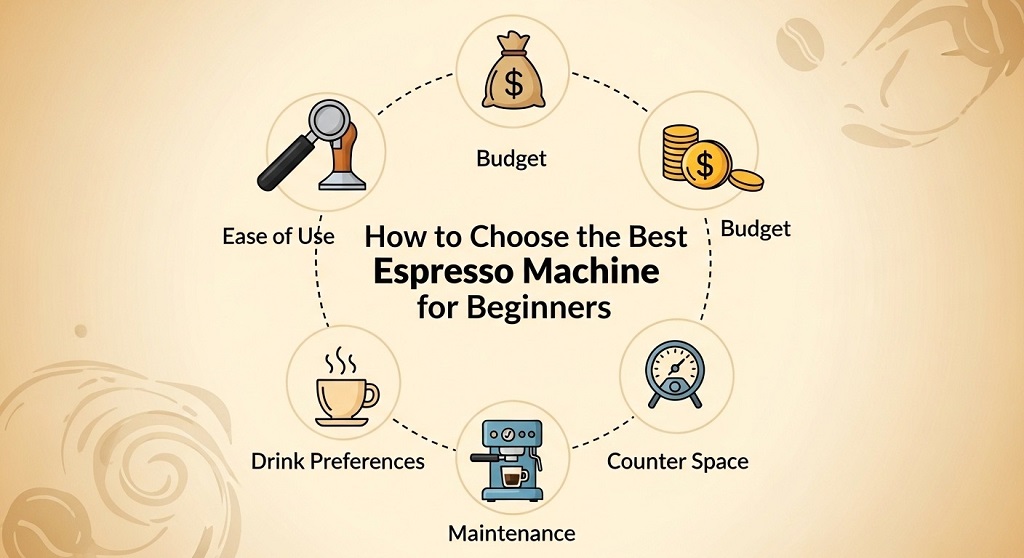
The best espresso machine for beginners is a reliable semi-automatic espresso machine with stable temperature control, consistent pressure (9 bars), and simple controls. It should allow you to control grind size, shot timing, and milk steaming without overwhelming complexity.
Many first-time buyers assume they need a high-end café machine. They don’t. What beginners actually need is consistency, control, and ease of learning. A well-built beginner coffee machine helps you understand espresso fundamentals—grind size, dose, extraction time, and milk texturing—without unnecessary features.
According to the National Coffee Association, over 60% of Americans drink coffee daily, and home espresso machine sales have grown steadily since 2020. More people are making café-style drinks at home. But many beginners buy the wrong machine and struggle with bitter shots, weak crema, or poor milk foam.
This guide follows a clear structure. We will break down what matters, what doesn’t, and how to choose the right machine step by step—without confusion.
Why Do Beginners Struggle with Choosing an Espresso Machine?
Short answer: Beginners struggle because espresso machines vary widely in type, price, pressure systems, and learning curve.
Problem: The market is crowded. You’ll see manual machines, capsule systems, fully automatic models, and semi-automatic espresso machines. Prices range from $100 to over $2,000.
Agitation: Many new buyers choose based on looks or brand popularity. Then they realize:
- The machine doesn’t maintain stable temperature.
- Pressure is inconsistent.
- Milk steaming is weak.
- Replacement parts are expensive.
A 2023 consumer appliance survey showed that nearly 40% of first-time espresso machine buyers wished they had researched more about pressure and temperature control before purchasing.
Solution: Focus on function first. A beginner coffee machine should help you learn proper espresso extraction. That usually means choosing a semi-automatic espresso machine rather than a capsule-only system.
What Types of Espresso Machines Should Beginners Consider?
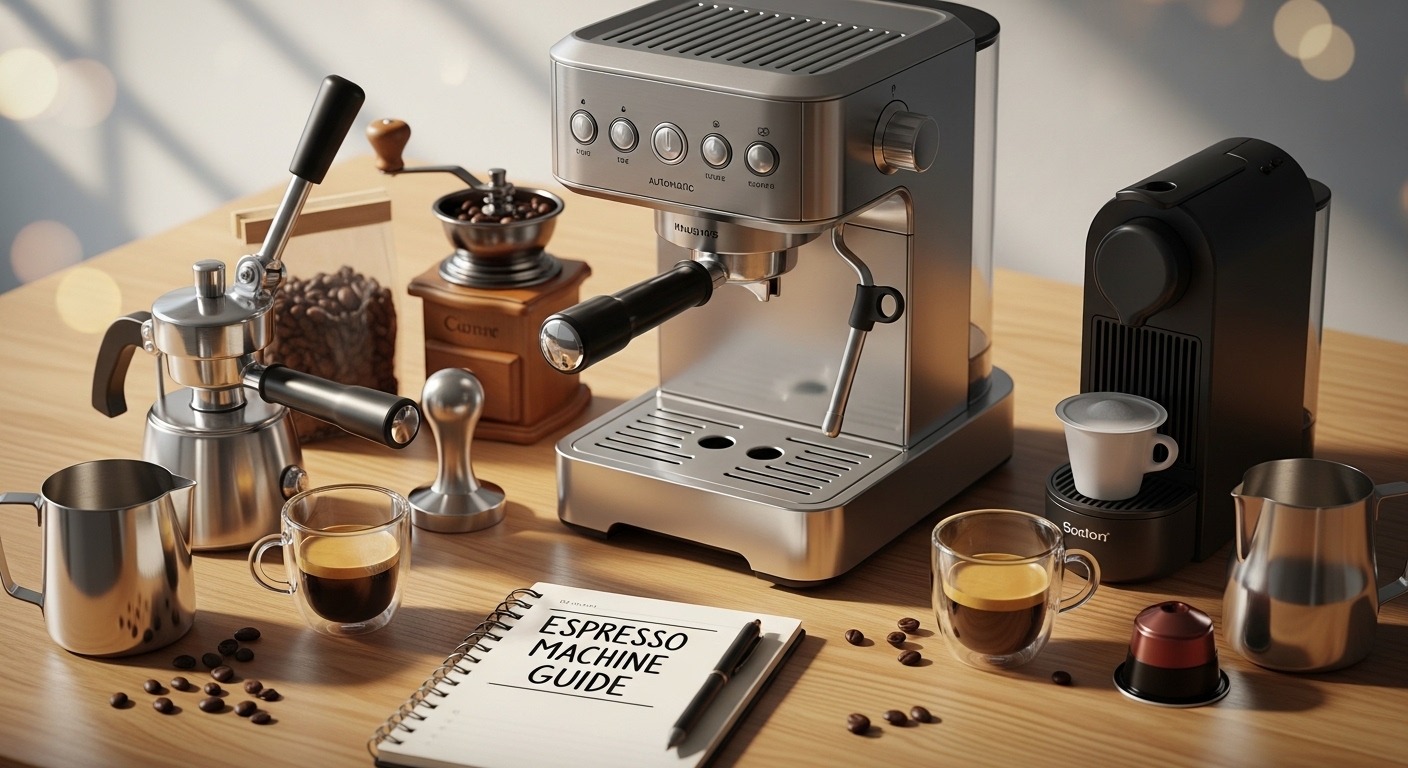
Short answer: Beginners should consider semi-automatic machines first, then automatic machines. Manual lever machines are not ideal for beginners.
1. Manual Espresso Machines
These require full control of pressure using a lever. They offer precision but demand experience. Not recommended for beginners.
2. Semi-Automatic Espresso Machines
This is the sweet spot. You control grinding, dosing, and shot timing. The machine handles water pressure (typically 9 bars).
- Better learning experience
- More control over flavor
- Consistent results once dialed in
3. Fully Automatic Machines
These automate shot timing. Good for convenience but less flexible for learning extraction techniques.
4. Super-Automatic Machines
Grind, brew, and steam with one button. High convenience. Limited customization. Higher cost.
For most people starting out, a semi-automatic espresso machine provides balance between control and simplicity.
What Features Matter Most in a Beginner Coffee Machine?
Short answer: Focus on pressure stability, temperature control, build quality, and steam power.
1. Pressure (9 Bars Is Ideal)
Espresso requires about 9 bars of pressure for proper extraction. Many machines advertise 15–20 bars. That number refers to pump capacity, not brewing pressure. What matters is stable 9-bar extraction.
2. Temperature Stability
Water should be around 195°F–205°F (90°C–96°C). Machines with PID temperature control maintain stable heat. This improves shot consistency.
3. Portafilter Size
Look for a 58mm portafilter if possible. It’s industry standard. It allows better tamping and upgrade flexibility.
4. Steam Wand Quality
If you want cappuccino or latte, choose a machine with a manual steam wand—not an automatic frother. Manual wands allow microfoam creation.
5. Build Material
Stainless steel housing lasts longer than plastic. Internal components matter more than exterior design.
Should Beginners Buy a Built-In Grinder?
Short answer: Not necessarily. A separate burr grinder often delivers better consistency.
Espresso requires fine, consistent grind size. Blade grinders are not suitable. Burr grinders are essential.
Case example: A home brewing study by a specialty coffee retailer compared extraction yields using blade grinders vs burr grinders. Burr grinders produced 18–22% extraction yield, while blade grinders showed uneven extraction under 15%. Uneven extraction leads to sour or bitter shots.
Some beginner coffee machines come with built-in grinders. They save space. But they can be harder to upgrade later. If budget allows, buying a separate burr grinder provides better long-term value.
How Much Should a Beginner Spend on an Espresso Machine?
Short answer: Expect to spend $300–$800 for a reliable semi-automatic espresso setup.
| Budget Range | What You Get | Who It’s For |
|---|---|---|
| $100–$300 | Entry-level machines, limited stability | Occasional users |
| $300–$800 | Stable pressure, good steam wand, better durability | Serious beginners |
| $800+ | PID control, dual boiler, advanced features | Enthusiasts |
Most beginners are best served in the $400–$700 range. It balances reliability and learning potential.
Is a Semi-Automatic Espresso Machine Hard to Use?
Short answer: No. It requires practice, but the learning curve is manageable.
Here’s what you control:
- Grind size
- Coffee dose (usually 18–20g)
- Tamping pressure
- Shot time (25–30 seconds)
With consistent practice, most beginners achieve balanced shots within 1–2 weeks.
The benefit? You learn how extraction works. That skill transfers across machines.
What Maintenance Is Required for Beginner Espresso Machines?
Short answer: Daily cleaning and monthly descaling are essential.
- Flush group head after each use
- Clean steam wand immediately
- Backflush weekly (if supported)
- Descale every 1–3 months depending on water hardness
Hard water increases mineral buildup. Using filtered water improves machine lifespan.
What Mistakes Should Beginners Avoid?
Short answer: Avoid choosing based only on price or brand hype.
- Buying capsule machines expecting café-level control
- Ignoring grinder quality
- Not budgeting for accessories (tamper, scale, knock box)
- Overlooking warranty coverage
A balanced setup matters more than a flashy machine.
How Do You Choose the Right Beginner Coffee Machine Step by Step?
Short answer: Define your goals, set budget, prioritize semi-automatic models, and check core specs.
- Decide if you want milk drinks.
- Set realistic budget.
- Choose semi-automatic espresso machine.
- Check 9-bar pressure and temperature stability.
- Invest in burr grinder.
- Read long-term reliability reviews.
Simple framework. Clear decision.
Conclusion: What Is the Smart Choice for Beginners?
Choosing the best espresso machine for beginners is not about buying the most expensive model. It’s about choosing a machine that teaches you espresso fundamentals while delivering consistent results.
A semi-automatic espresso machine with stable pressure, reliable temperature control, and a quality steam wand gives you room to grow. Pair it with a burr grinder. Maintain it properly. Practice extraction timing.
Within weeks, you’ll understand grind size, dosing, and milk texturing. That knowledge turns frustration into control.
Ready to upgrade your coffee routine? Start by listing your priorities today—budget, drink preference, and kitchen space. Then choose a machine that supports learning, not shortcuts. Your future espresso depends on it.
Frequently Asked Questions (FAQs)
1. What is the best beginner coffee machine type?
A semi-automatic espresso machine is best for beginners who want control and learning potential without extreme complexity.
2. How many bars of pressure are needed for espresso?
About 9 bars of brewing pressure are ideal for proper extraction and crema formation.
3. Do beginners need a separate grinder?
Yes. A burr grinder ensures consistent grind size, which directly impacts flavor and extraction quality.
4. How long does it take to learn espresso basics?
Most beginners achieve consistent shots within 1–2 weeks of practice.
5. Is PID temperature control necessary?
Not mandatory, but it improves temperature stability and shot consistency.
6. Can I make latte art with a beginner machine?
Yes, if the machine includes a manual steam wand capable of producing microfoam.
7. How often should I descale my espresso machine?
Every 1–3 months depending on water hardness and usage frequency.
Related Topics: Can You Soundproof Internal Walls? A Comprehensive Guide
What Next: What Are the Items for Decorating a House?