
A successful bathroom remodel starts with a clear plan, practical layouts, and durable materials that fit daily needs. The best results come from balancing function, comfort, storage, lighting, and design while staying within budget. Bathroom remodeling remains one of the most valuable home improvement projects today. Studies show that well planned bathroom renovations can recover a significant portion of their cost during resale.
More importantly, a remodeled bathroom improves daily comfort and supports changing lifestyle needs. Whether the goal involves modern aesthetics, better storage, or improved accessibility, thoughtful planning creates a space that feels beautiful and performs exceptionally well.
Why Bathroom Remodeling Matters
A bathroom serves more purposes than many homeowners realize. It supports daily routines, influences comfort, and contributes to overall property value.
Moreover, outdated bathrooms often waste space and energy. Old fixtures, poor lighting, and inadequate storage can create ongoing frustration.
When remodeling is approached strategically, every square foot works harder. As a result, homeowners enjoy a more efficient and enjoyable environment.
Defining Your Vision Before Construction
Every successful project begins with a clear vision. Without direction, decisions become difficult and expenses often increase.
Start by identifying the primary objective. Some homeowners prioritize luxury, while others focus on practicality and organization.
Consider these common remodeling goals:
: Better storage capacity
: Improved lighting quality
: Enhanced accessibility features
: Modern design upgrades
: Increased home value
: Greater energy efficiency
Once priorities become clear, design choices become easier and more consistent.
Building a Realistic Remodeling Budget
A budget provides structure throughout the remodeling process. It also helps prevent costly surprises later.
Begin by separating essential upgrades from optional features. Then allocate funds according to project priorities.
Key budget categories include:
: Demolition and preparation
: Plumbing updates
: Electrical improvements
: Flooring installation
: Cabinetry and storage
: Fixtures and hardware
: Labor expenses
: Contingency reserves
Furthermore, maintaining a financial buffer allows flexibility when unexpected issues appear during construction.
Choosing the Right Bathroom Layout
Layout decisions influence functionality more than decorative elements. Therefore, careful planning deserves significant attention.
A good layout supports movement and accessibility. It also ensures every fixture has adequate space.
Small Bathroom Layout Strategies
Limited square footage requires creative thinking. However, small bathrooms can feel surprisingly spacious with the right approach.
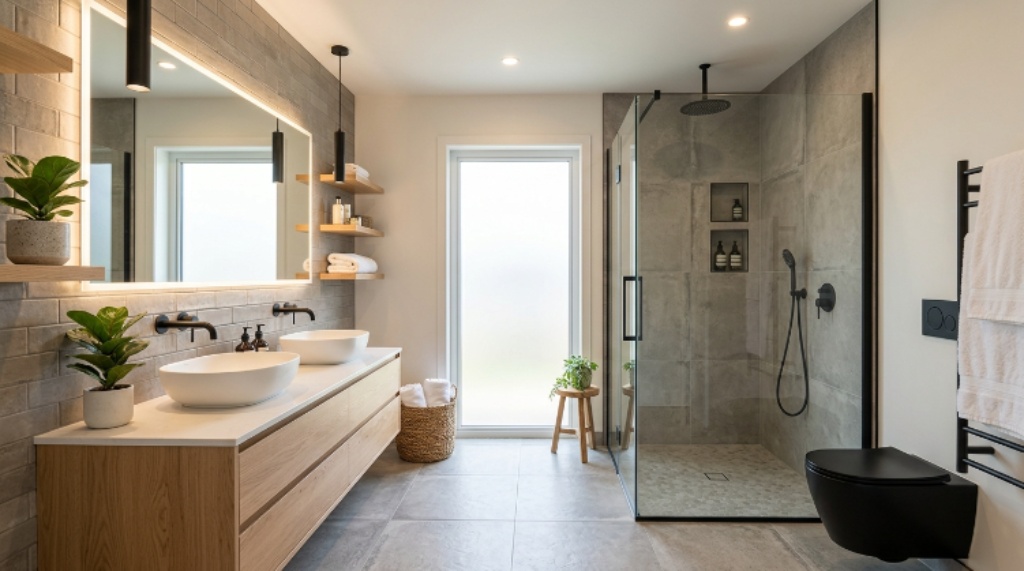
Wall mounted vanities create visual openness. Likewise, glass shower enclosures help maintain uninterrupted sightlines.
Smart solutions include:
: Floating storage units
: Corner sinks
: Recessed shelving
: Large mirrors
: Compact fixtures
These features maximize usability without making the room feel crowded.
Large Bathroom Layout Opportunities
Larger bathrooms provide additional flexibility. Consequently, homeowners can introduce luxury elements without sacrificing functionality.
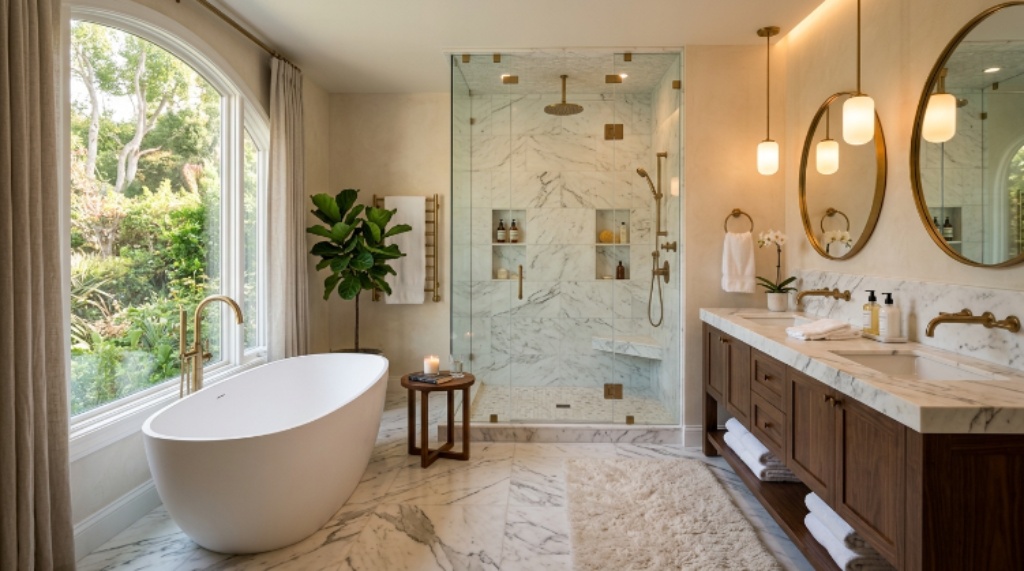
Popular additions include soaking tubs, double vanities, and spacious walk in showers. Meanwhile, separate zones can improve organization and privacy.
The goal remains balance. Even expansive bathrooms should feel cohesive and easy to navigate.
Selecting Materials That Last
Material selection directly affects durability and maintenance requirements. Therefore, long term performance should guide purchasing decisions.
Water resistance remains the top priority. Bathrooms experience constant moisture exposure throughout the year.
Popular material choices include:
: Porcelain tile flooring
: Quartz countertops
: Moisture resistant paint
: Ceramic wall tile
: Tempered glass panels
: Solid wood alternatives
Although trends change frequently, durable materials continue delivering value for years.
The Importance of Smart Storage
Storage often determines whether a bathroom feels organized or chaotic. Consequently, thoughtful storage planning deserves careful consideration.
Many homeowners underestimate their storage needs. As families grow, clutter often becomes a recurring challenge.
Effective storage options include:
: Built in niches
: Vanity drawers
: Tall linen cabinets
: Under sink organizers
: Recessed medicine cabinets
: Open shelving accents
When storage integrates naturally into the design, the bathroom feels cleaner and more functional.
Lighting That Enhances Every Detail
Lighting affects both appearance and functionality. Yet many bathrooms still rely on inadequate lighting solutions.
Layered lighting creates the best results. Instead of depending on one fixture, combine multiple light sources.
Ambient Lighting
Ambient lighting provides overall illumination. It establishes the foundation for the entire room.
Ceiling fixtures and recessed lights commonly fulfill this role. Additionally, proper placement minimizes shadows and dark corners.
Task Lighting
Task lighting supports grooming activities. Therefore, vanity areas require focused illumination.
Lights positioned near mirrors improve visibility. As a result, daily routines become easier and more comfortable.
Accent Lighting
Accent lighting introduces atmosphere and visual interest. It highlights architectural features and decorative elements.
For example, under vanity lighting can create a sophisticated floating appearance while improving nighttime visibility.
Creating a Luxurious Shower Experience
Modern showers have become central design features in many remodeled bathrooms. Consequently, homeowners increasingly prioritize shower upgrades.
Walk in showers offer accessibility and visual appeal. Furthermore, they often make bathrooms appear larger.
Popular shower enhancements include:
: Rainfall showerheads
: Frameless glass panels
: Built in seating
: Linear drains
: Multiple spray options
: Integrated storage niches
Together, these features transform ordinary showers into relaxing personal retreats.
Choosing the Perfect Vanity
The vanity often serves as the room’s visual centerpiece. Therefore, selecting the right model significantly impacts the final design.
Size, storage, and countertop materials all deserve attention. Equally important, the vanity should complement the room’s overall style.
Double vanities work well in shared bathrooms. Meanwhile, single vanities often maximize space in smaller layouts.
A carefully selected vanity blends functionality and aesthetics seamlessly.
Integrating Accessibility Features
Accessibility improvements benefit homeowners at every life stage. Consequently, universal design principles continue gaining popularity.
Accessible features often improve safety without compromising appearance. In many cases, they enhance convenience for all users.
Valuable accessibility upgrades include:
: Curbless showers
: Grab bars
: Wider doorways
: Non slip flooring
: Comfort height toilets
: Lever style handles
These additions support long term usability while maintaining an attractive design.
Improving Energy Efficiency
Energy efficient bathrooms reduce operating costs and environmental impact. Therefore, efficiency should remain part of every remodeling conversation.
Modern fixtures consume fewer resources while delivering strong performance. Additionally, many options require minimal maintenance.
Effective upgrades include:
: Low flow toilets
: Water saving faucets
: LED lighting
: Efficient ventilation systems
: Smart controls
: Insulated plumbing components
Over time, these improvements contribute meaningful savings.
Avoiding Common Remodeling Mistakes
Many bathroom remodeling problems result from poor planning rather than poor construction. Consequently, preparation remains essential.
Rushing decisions often creates expensive corrections later. Likewise, prioritizing appearance over functionality can lead to disappointment.
Common mistakes include:
: Ignoring storage requirements
: Choosing unsuitable materials
: Poor lighting placement
: Inadequate ventilation
: Unrealistic budgeting
: Overlooking future needs
By anticipating these challenges early, homeowners can avoid unnecessary setbacks.
Working With Remodeling Professionals
Experienced professionals bring technical knowledge and project management skills. Therefore, selecting qualified experts greatly influences outcomes.
Review portfolios carefully before making decisions. Additionally, discuss expectations, timelines, and communication preferences upfront.
A strong remodeling team helps transform ideas into practical solutions. As a result, projects typically progress more smoothly and efficiently.
Conclusion
Expert bathroom remodeling combines thoughtful planning, durable materials, practical layouts, and personalized design choices. When every decision supports both beauty and functionality, the finished space delivers lasting comfort and value.
If you are ready to transform your bathroom, start with a clear vision and work with experienced professionals who understand your goals. The right remodeling strategy can turn an ordinary bathroom into the dream space you enjoy every day.
FAQs
How long does a typical bathroom remodel take?
Most bathroom remodeling projects take several weeks depending on size and complexity.
What adds the most value during a bathroom remodel?
Updated showers, quality vanities, efficient fixtures, and modern lighting often provide strong value.
Is a walk in shower better than a bathtub?
A walk in shower offers accessibility and convenience, although household needs should guide the choice.
What flooring works best in bathrooms?
Porcelain tile remains one of the most durable and water resistant flooring options.
Should I hire professionals for bathroom remodeling?
Professional contractors help ensure proper installation, code compliance, and long term performance.