

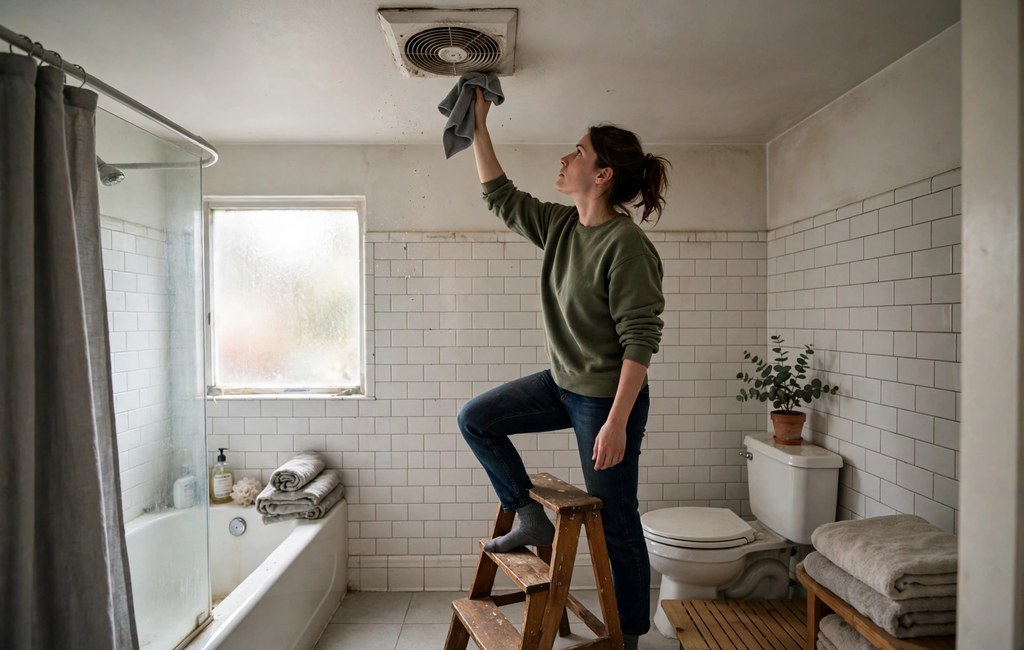
Hot shower, foggy mirror, and a ceiling fan that hums like it’s tired but does nothing. If your bathroom stays steamy long after you’re done, the fan isn’t doing its job. The cause is often boring: a thick mat of dust and lint clogging the grille and housing.
The good news is that bathroom vent cleaning is one of the easiest home maintenance jobs, and it takes about fifteen minutes. The better news is that doing it regularly helps keep moisture, mildew, and mold under control. Here’s how to do it safely and how to tell when the problem is bigger than dust.
Why does a bathroom vent fan need cleaning?
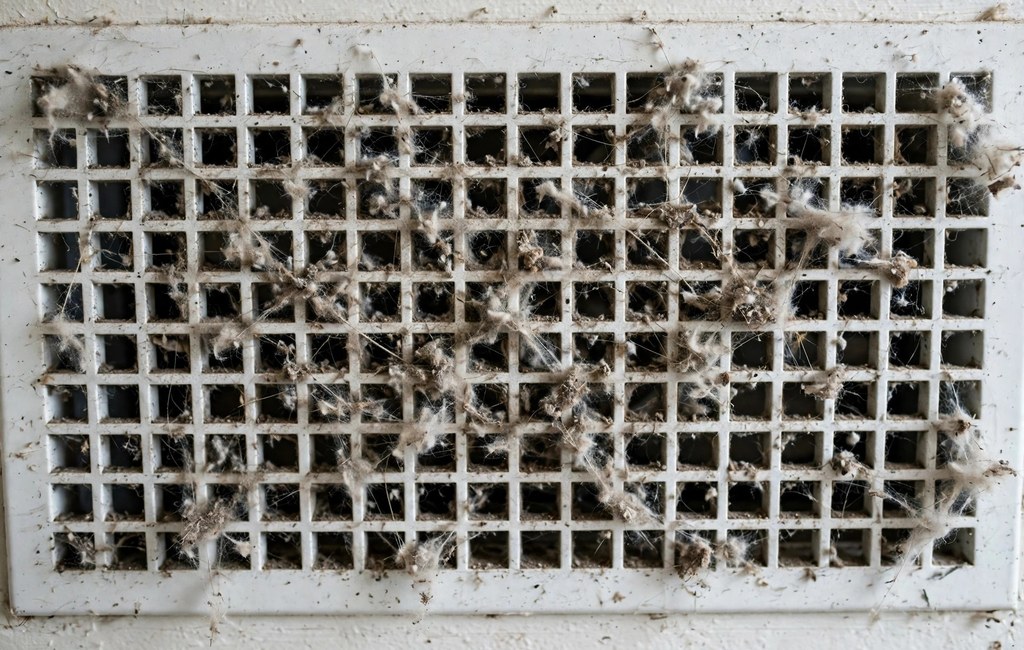
A bathroom fan pulls moist air out of the room. Along the way it pulls in dust, hair, and lint, which cling to the grille, the blades, and the housing. As that layer thickens, airflow drops, the motor works harder, and moisture lingers on walls and ceilings. Persistent moisture can lead to peeling paint, musty odor, and mildew. A clean fan moves more air, runs more quietly, and typically lasts longer.
What do you need before you start?
- A stable step stool or ladder.
- A screwdriver, if your cover is screwed on.
- A vacuum with a brush or crevice attachment.
- A soft cloth or sponge and a bowl of warm, soapy water.
- A dry microfiber cloth.
- Safety glasses and a dust mask, since dust will fall.
How do you clean a bathroom exhaust fan, step by step?
- Turn off the power. Flip the wall switch off, then go to your electrical panel and turn off the breaker that feeds the bathroom. The wall switch alone isn’t a complete shutoff.
- Remove the cover. Most grilles are held by two spring clips. Gently pull the cover down, squeeze the metal clips together, and release them from the housing. Some covers use screws.
- Wash the cover. Soak it in warm, soapy water, scrub off the buildup, rinse, and let it dry completely.
- Vacuum the housing and blades. Use the brush attachment to remove loose dust from inside the housing, around the fan blades, and along the edges. Don’t force the blades.
- Wipe the surfaces. Use a damp, not dripping, cloth on the housing and blades. Never spray liquid on the motor or wiring, and dry everything with a clean cloth.
- Reassemble. Once everything is dry, snap the cover back into place.
- Restore power and test. Turn the breaker back on, switch the fan on, and listen for smooth, quiet operation.
How can you test whether the fan is moving enough air?
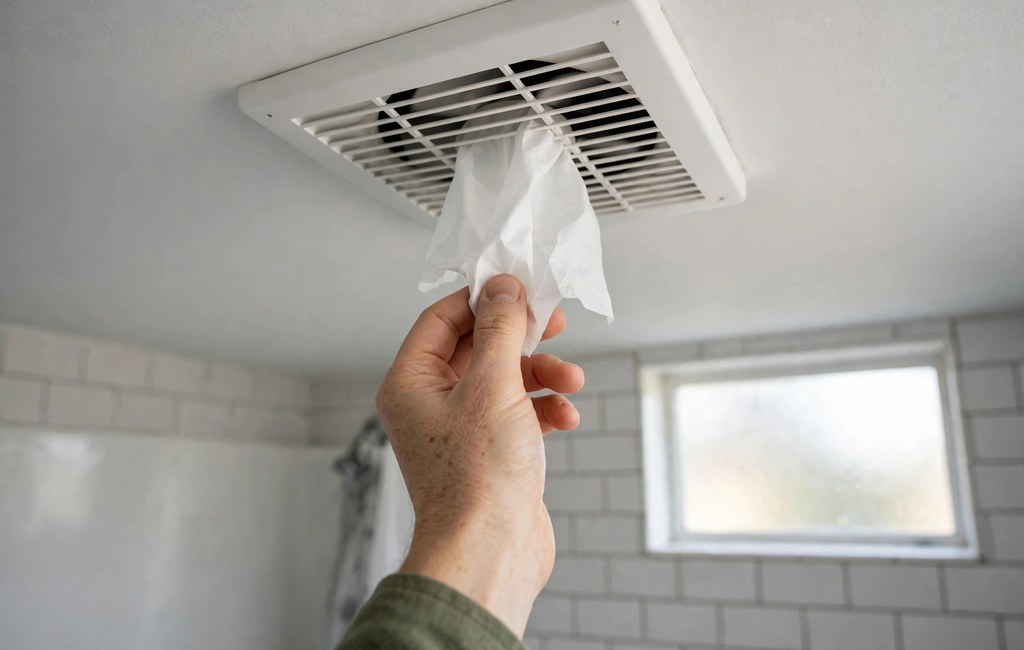
Hold a single square of toilet tissue against the grille while the fan runs. If it clings firmly, airflow is decent. If it flutters or falls, something is restricting the fan. Dust may be part of it, but also check the duct and the outside vent.
What about the duct and the outside vent?
A clean fan can still underperform if the path to the outdoors is blocked. Look for the exterior termination, which is usually a hood on the roof or a flap on an outside wall. Make sure the flap opens freely and isn’t blocked by lint, bird nests, or debris. A properly installed bathroom fan should vent outdoors, not into the attic, since dumping humid air there can cause moisture damage and mold. If you can’t tell where yours goes, have an HVAC or home inspection professional check it. Crushed, disconnected, or long, sagging flexible duct also reduces airflow dramatically.
How often should you clean a bathroom vent?
Wipe or vacuum the cover every few months. Do a full cleaning, including the housing and blades, once or twice a year. If you have long hair in the house, a small, poorly ventilated bathroom, or heavy daily use, clean more often. Pair the habit with something you already do, like changing the smoke detector batteries in spring and fall.
How long should you run the fan after a shower?
A commonly recommended habit is to leave the fan on for about twenty minutes after bathing, which gives it time to clear leftover moisture. A timer switch or a humidity-sensing control makes this automatic. Combine it with a squeegee on shower walls and a fully dry bathmat, and the room stays drier all year.
When does cleaning not solve the problem?
Some problems need repair or replacement. Consider calling a professional if:
- The fan is very loud or rattles even after cleaning.
- It runs, but the mirror stays fogged and the tissue test fails.
- You see water stains on the ceiling or dripping from the fan.
- There’s mold growth on the ceiling or walls around the fan.
- The motor smells hot or burning, or the fan won’t turn on.
- The fan is very old and undersized for your bathroom.
Bathroom fans are rated by airflow, measured in cubic feet per minute, or CFM. A fan that’s too small for the room, or a motor that has worn out, simply can’t clear moisture, no matter how clean it is. Replacement units are quiet, efficient, and often easy to install.
Frequently asked questions about bathroom vent cleaning
Can I clean a bathroom fan without turning off the power?
It’s safer to shut off the breaker. A wall switch can still leave wiring live in the fan housing, and you will be reaching into the unit.
Why is my bathroom fan so loud?
Dust on the blades, loose screws, or a worn motor are common causes. Cleaning and tightening may help. If the noise continues, the motor or bearings may need replacement.
How do I clean a bathroom fan that has mold on it?
Wear gloves, eye protection, and a mask, wash the cover with detergent and water, and dry it thoroughly. If mold covers a large area or keeps returning, find the moisture source and consider professional help.
Does a bathroom fan need to vent outside?
Yes. A fan that vents into an attic or wall cavity moves moisture into a hidden space, where it can cause mold and structural damage.
Bathroom still damp after cleaning the fan?
Don’t let moisture and mildew take over. Our team can inspect your fan, ductwork, and exterior vent, and tell you whether the fix is a quick cleaning or a repair. Contact us today to schedule a visit and get your bathroom breathing again.