
Key Takeaways
- Yes, plastic push-fit fittings can be used on copper pipe, and they’re designed for this exact purpose.
- Brands like SharkBite are specifically engineered to connect copper, CPVC, and PEX pipes without soldering or tools.
- These fittings create reliable, leak-proof joints that are approved for many residential water supply applications.
- Always check the manufacturer’s specifications and local plumbing codes before installation.
- Proper preparation of the copper pipe is crucial for a secure, long-lasting connection.
If you’ve ever stood in the plumbing aisle, staring at a wall of fittings and wondering if you can mix materials, you’re not alone. One of the most common questions DIYers ask is: Can you use plastic push-fit on copper pipe? The short answer is yes—but as plumbing experts at Accurehome.com caution, there’s more to a leak-free connection than just pushing a fitting onto a pipe.
I remember the first time I needed to connect a new PEX line to an existing copper pipe in my basement. I didn’t own a soldering torch, and the idea of sweating pipes in a tight space filled me with dread. That’s when I discovered plastic push-fit fittings. They allowed me to make a secure connection in minutes, without any special tools or fire hazards. Since then, I’ve used them for multiple projects, and they’ve never let me down.
This guide will explain everything you need to know about using plastic push-fit fittings on copper pipe. You’ll learn how they work, how to install them correctly, and when they’re the best choice for your project. By the end, you’ll have the confidence to mix materials like a pro.
Understanding Plastic Push-Fit Fittings and Their Compatibility
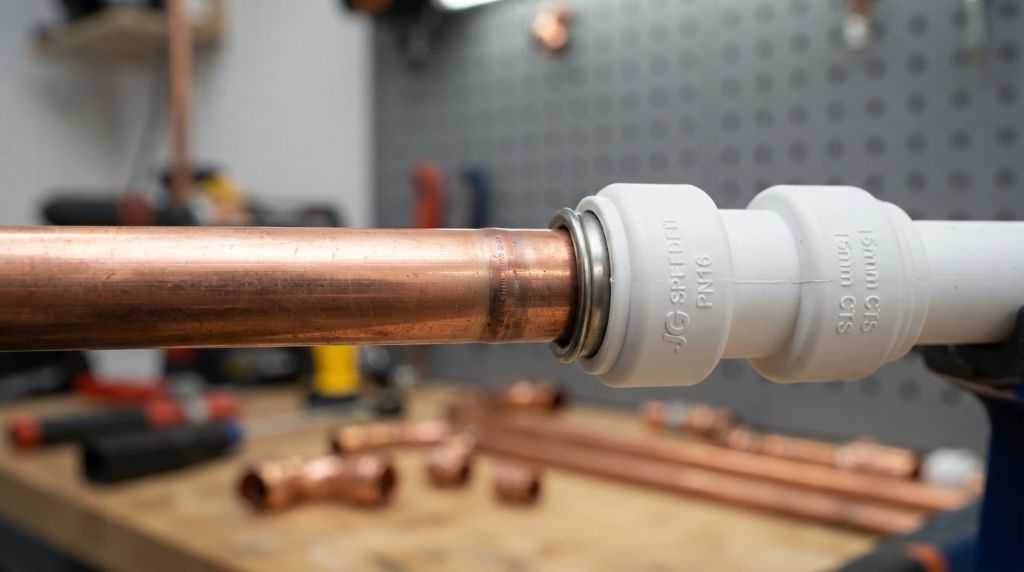
Plastic push-fit fittings, often known by the brand name SharkBite, are designed to create quick, reliable connections between pipes without the need for soldering, glue, or special tools. These fittings are engineered to work with multiple pipe materials, including copper, CPVC, and PEX. The key to their versatility lies in their internal design, which uses a combination of O-rings and grip rings to create a watertight seal.
The O-rings inside the fitting provide a waterproof barrier, while the grip rings—made of stainless steel—bite into the pipe to hold it securely in place. This dual-action design ensures that the fitting can handle different pipe materials, including the smooth surface of copper. According to the manufacturer’s specifications, SharkBite fittings are rated for use with Type K, L, and M copper pipe, which covers most residential plumbing applications.
What makes these fittings so popular is their ease of use. Unlike traditional methods that require heat, flux, or solvents, push-fit fittings can be installed in seconds with nothing more than a simple push. This makes them ideal for DIYers, emergency repairs, or situations where soldering isn’t practical. Additionally, they’re reusable, which means you can disconnect and reconnect the fitting as needed without damaging the pipe or the fitting.
However, it’s important to note that not all plastic push-fit fittings are created equal. While SharkBite is a well-known and trusted brand, there are other manufacturers that produce similar products. Always check the packaging or the manufacturer’s website to confirm that the fitting is rated for use with copper pipe. Some generic or off-brand fittings may not meet the same standards for compatibility and reliability.
I’ve used SharkBite fittings extensively in my home, and they’ve held up flawlessly. Whether I’m connecting copper to PEX or repairing a leak in a copper line, these fittings have provided a secure, long-lasting solution. Therefore, if you’re looking for a simple, tool-free way to join copper pipe to plastic or other materials, push-fit fittings are an excellent choice.
How to Use Plastic Push-Fit Fittings on Copper Pipe
Using plastic push-fit fittings on copper pipe is a straightforward process, but proper preparation is key to ensuring a leak-proof connection. Follow these steps to do it right the first time.
First, cut the copper pipe to the desired length using a pipe cutter. It’s important to make a clean, straight cut to ensure the pipe fits properly into the fitting. Avoid using a hacksaw, as it can leave burrs and uneven edges that may prevent the fitting from sealing correctly.
Next, use a deburring tool or a file to remove any sharp edges or burrs from the cut end of the pipe. This step is crucial because burrs can damage the O-rings inside the fitting, leading to leaks. Additionally, a smooth end ensures that the pipe slides into the fitting easily and seats properly against the O-rings.
Before inserting the pipe, check the depth marking on the fitting. Most push-fit fittings have a line or indicator that shows how far the pipe should be inserted. This ensures that the pipe reaches the O-rings and grip rings, creating a secure seal. If the pipe isn’t inserted far enough, the connection may leak.
Now, simply push the copper pipe into the fitting until it reaches the depth mark. You should feel some resistance as the grip rings engage with the pipe. Once the pipe is fully seated, give it a gentle tug to confirm it’s secure. If the pipe doesn’t come out, the fitting is properly installed.
One of the great things about push-fit fittings is that they don’t require any special tools for installation. However, if you’re working in a tight space, a push-fit tool can help you apply even pressure to ensure the pipe is fully seated. These tools are inexpensive and can be a worthwhile investment if you plan to use push-fit fittings frequently.
I learned the importance of proper preparation the hard way. On my first attempt, I skipped the deburring step and ended up with a small leak. After redoing the connection and smoothing the pipe end, the leak disappeared. Therefore, taking the time to prepare the pipe correctly is essential for a reliable connection.
Pros and Cons of Using Plastic Push-Fit on Copper
Plastic push-fit fittings offer several advantages when used on copper pipe, but they also have some limitations. Understanding the pros and cons will help you decide if they’re the right choice for your project.
One of the biggest advantages is the ease of installation. Push-fit fittings can be installed in seconds without any special tools or skills. This makes them ideal for DIYers, emergency repairs, or situations where soldering isn’t practical. Additionally, they’re reusable, which means you can disconnect and reconnect the fitting as needed without damaging the pipe or the fitting.
Another benefit is their versatility. Push-fit fittings can connect copper to other materials like PEX or CPVC, making them a great option for transitioning between different types of pipe. This is especially useful for homeowners who are updating their plumbing but don’t want to replace all their existing copper pipes.
Push-fit fittings are also reliable when installed correctly. According to the manufacturer, SharkBite fittings are rated for up to 200 PSI and 200°F, making them suitable for most residential water supply applications. They’re also approved by industry standards, including NSF/ANSI 61 for drinking water and ASTM F1974 for mechanical joints.
However, there are some downsides to consider. Push-fit fittings are more expensive than traditional soldered joints or compression fittings. Additionally, while they’re approved for many applications, some local plumbing codes may not allow them for permanent installations, especially for gas lines. Always check your local codes before using push-fit fittings for a permanent project.
Another limitation is that push-fit fittings may not be suitable for all environments. For example, they’re not recommended for use in direct sunlight or areas with extreme temperature fluctuations, as this can degrade the plastic over time. Additionally, while they’re great for water supply lines, they may not be the best choice for high-pressure or high-temperature applications.
I’ve used push-fit fittings for several projects in my home, including repairing a leak under my sink and connecting a new PEX line to my copper water supply. They’ve worked perfectly for these applications, but I wouldn’t use them for a gas line or an outdoor installation. Therefore, while push-fit fittings are a great option for many situations, it’s important to understand their limitations.
When to Use Plastic Push-Fit on Copper (And When to Avoid It)
Plastic push-fit fittings are a versatile solution for many plumbing projects, but they’re not suitable for every application. Knowing when to use them—and when to avoid them—will help you make the best choice for your needs.
Push-fit fittings are ideal for residential water supply lines, including both hot and cold water. They’re approved for use in most homes and can handle the typical water pressure and temperature ranges found in these systems. Additionally, they’re a great choice for DIY projects, emergency repairs, or situations where you need to make a quick connection without special tools.
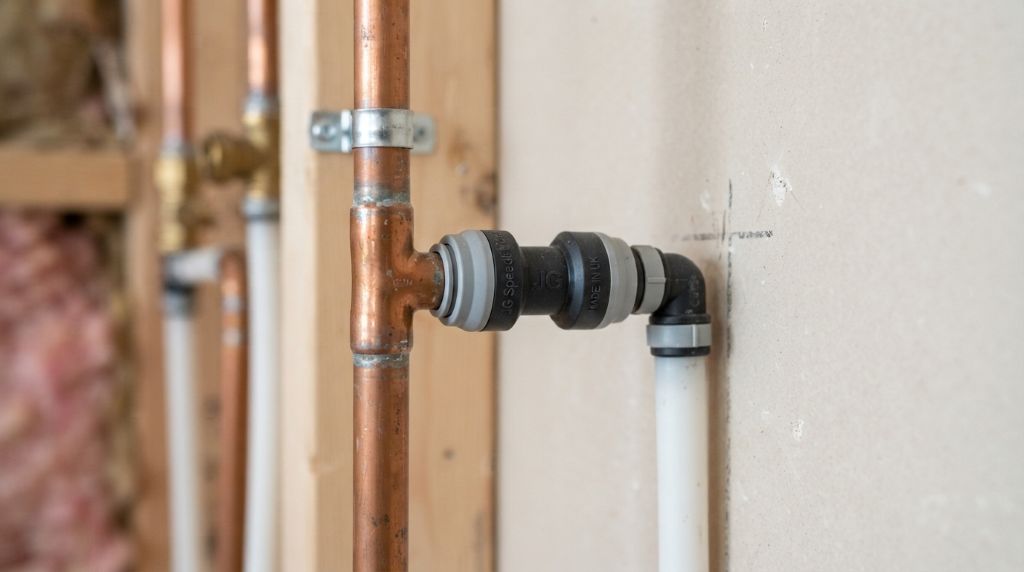
These fittings are also perfect for transitioning between different types of pipe. For example, if you’re updating your plumbing and need to connect a new PEX line to an existing copper pipe, a push-fit fitting makes the job simple and reliable. This versatility is one of the reasons why push-fit fittings have become so popular among homeowners and professionals alike.
However, there are situations where push-fit fittings should be avoided. For example, they’re not recommended for gas lines in most jurisdictions. While some push-fit fittings are rated for gas, local codes often require traditional methods like soldering or flare fittings for gas installations. Always check with your local building department before using push-fit fittings for gas lines.
Push-fit fittings are also not suitable for outdoor use or areas exposed to direct sunlight. The plastic can degrade over time when exposed to UV rays and extreme temperatures, leading to leaks or failures. If you need to make a connection outdoors, consider using a different method, such as compression fittings or soldering.
Another consideration is the type of copper pipe you’re working with. Push-fit fittings are compatible with Type K, L, and M copper, which are the most common types used in residential plumbing. However, they may not be suitable for other types of copper pipe or for pipes that are damaged or corroded. Always inspect your pipe before installation to ensure it’s in good condition.
I’ve used push-fit fittings for various projects in my home, from repairing leaks to installing new fixtures. They’ve worked perfectly for water supply lines, but I’ve avoided using them for gas lines or outdoor installations. Therefore, understanding the appropriate applications for push-fit fittings is key to their success.
Common Mistakes and How to Avoid Them
While plastic push-fit fittings are designed to be user-friendly, there are still some common mistakes that can lead to leaks or failures. Avoiding these pitfalls will help you create a reliable, long-lasting connection.
One of the most common mistakes is not preparing the pipe properly. As mentioned earlier, it’s crucial to cut the pipe cleanly and remove any burrs or sharp edges. Failing to do so can damage the O-rings inside the fitting, leading to leaks. Always use a pipe cutter and a deburring tool to ensure a smooth, clean end.
Another mistake is not inserting the pipe far enough into the fitting. Most push-fit fittings have a depth mark that indicates how far the pipe should be inserted. If the pipe doesn’t reach this mark, the O-rings and grip rings won’t engage properly, and the connection may leak. Always double-check that the pipe is fully seated against the depth mark.
Over-tightening or under-tightening the fitting can also cause problems. While push-fit fittings don’t require tightening in the traditional sense, some people try to twist or force the pipe into the fitting, which can damage the O-rings. On the other hand, not pushing the pipe in far enough can result in a weak connection. The key is to push the pipe in straight and firm until it reaches the depth mark.
Using the wrong type of pipe is another common mistake. Push-fit fittings are designed for use with specific types of pipe, such as Type K, L, and M copper. Using them with incompatible pipe materials or damaged pipes can lead to leaks or failures. Always check the manufacturer’s specifications to ensure compatibility.
Finally, not pressure-testing the connection can lead to undetected leaks. After installing a push-fit fitting, always turn on the water and check for leaks at the joint. If you see any drips or signs of moisture, disconnect the fitting, inspect the pipe and fitting for damage, and reinstall it. For gas lines, use a soapy water solution to check for bubbles, which indicate a leak.
I made the mistake of not pressure-testing a connection once, and I ended up with a small leak that went unnoticed for a few days. Since then, I always test my connections immediately after installation. Therefore, taking the time to test your work can save you from potential headaches down the road.
Alternative Methods for Joining Copper to Plastic
While plastic push-fit fittings are a great option for joining copper to plastic, there are other methods you can use depending on your project’s requirements. Each method has its own advantages and limitations, so it’s worth understanding your options. It’s also important to consider how your plumbing system behaves after installation, especially if you notice issues such as movement or noise. For more information, see this guide on pipes knocking when hot water is turned on: causes, fixes & prevention tips.
Compression fittings are a reliable alternative for joining copper to plastic. These fittings use a brass or copper ring, called a ferrule, that compresses around the pipe when you tighten a nut. This creates a watertight seal without the need for heat or solvents. Compression fittings are widely used in both residential and commercial plumbing and are approved for many applications. However, they require a wrench and a pipe cutter, and they can be bulkier than push-fit fittings.
Threaded adapters are another option for joining copper to plastic. These adapters have male or female threads that allow you to screw them onto other threaded fittings or pipes. They’re commonly used to transition between different types of pipes, such as copper to PVC. However, threaded adapters require the use of pipe dope or Teflon tape to create a watertight seal, and they may not be as strong as other methods.
Soldering with transition couplings is a more traditional method for joining copper to plastic. This involves using a special coupling that allows you to solder a copper pipe to a threaded adapter, which can then be connected to a plastic pipe. While this method creates a strong, permanent joint, it requires a torch, solder, and flux, as well as some skill to do it correctly.
I’ve used all of these methods at one time or another, and each has its place. Compression fittings are my go-to for permanent installations where I want a reliable, long-lasting connection. Threaded adapters work well for transitioning between different types of pipe, and soldering is a good option when I need a permanent, code-approved joint. However, for most of my DIY projects, push-fit fittings are the simplest and most convenient choice.
Therefore, while push-fit fittings are a great option for many situations, it’s worth understanding the alternatives to choose the best method for your specific needs.
Frequently Asked Questions
Are plastic push-fit fittings as reliable as soldered joints on copper?
Yes, plastic push-fit fittings can be just as reliable as soldered joints when installed correctly. They’re rated for high pressure and temperature, and they’re approved for many residential water supply applications. However, the reliability depends on proper installation and adherence to the manufacturer’s specifications.
Can I use plastic push-fit fittings for hot water lines?
Yes, plastic push-fit fittings like SharkBite are rated for use with hot water lines up to 200°F, making them suitable for most residential hot water applications. However, always check the manufacturer’s specifications and local codes to ensure compliance.
Do I need any special tools to install plastic push-fit on copper?
No, plastic push-fit fittings can be installed without any special tools. However, you will need a pipe cutter and a deburring tool to prepare the copper pipe properly. A push-fit tool can also be helpful for working in tight spaces.
Are plastic push-fit fittings approved for underground use?
No, plastic push-fit fittings are not recommended for underground use. Exposure to soil, moisture, and temperature fluctuations can degrade the plastic over time, leading to leaks or failures. For underground installations, use a method approved for direct burial, such as soldering or compression fittings.
How long do plastic push-fit fittings last on copper pipe?
Plastic push-fit fittings are designed to last for the lifetime of your plumbing system when installed correctly. According to the manufacturer, SharkBite fittings come with a 25-year warranty, and many have been in use for over a decade without issues. However, their lifespan depends on proper installation and adherence to the manufacturer’s guidelines.
Conclusion
So, can you use plastic push-fit on copper pipe? The answer is a resounding yes. Plastic push-fit fittings like SharkBite are specifically designed to connect copper pipe to other materials, including PEX and CPVC, without the need for soldering, glue, or special tools. They’re reliable, easy to install, and approved for many residential water supply applications.
From my own experience, these fittings have saved me time, stress, and the hassle of soldering in tight spaces. Whether I’m making a quick repair or transitioning between pipe materials, they’ve provided a secure, leak-proof connection every time. However, it’s important to remember that proper preparation and installation are key to their success. Always cut and deburr the pipe, insert it fully into the fitting, and pressure-test the connection to ensure a reliable joint.
If you’re considering using plastic push-fit fittings for your next plumbing project, give them a try. They’re a game-changer for DIYers and professionals alike. Just be sure to check the manufacturer’s specifications and local plumbing codes to ensure they’re the right choice for your application.
Have you used plastic push-fit fittings on copper pipe? Share your experiences or questions in the comments below—we’d love to hear from you! And if you found this guide helpful, don’t forget to share it with others who might be tackling a plumbing project. Here’s to leak-free connections and successful DIY projects!