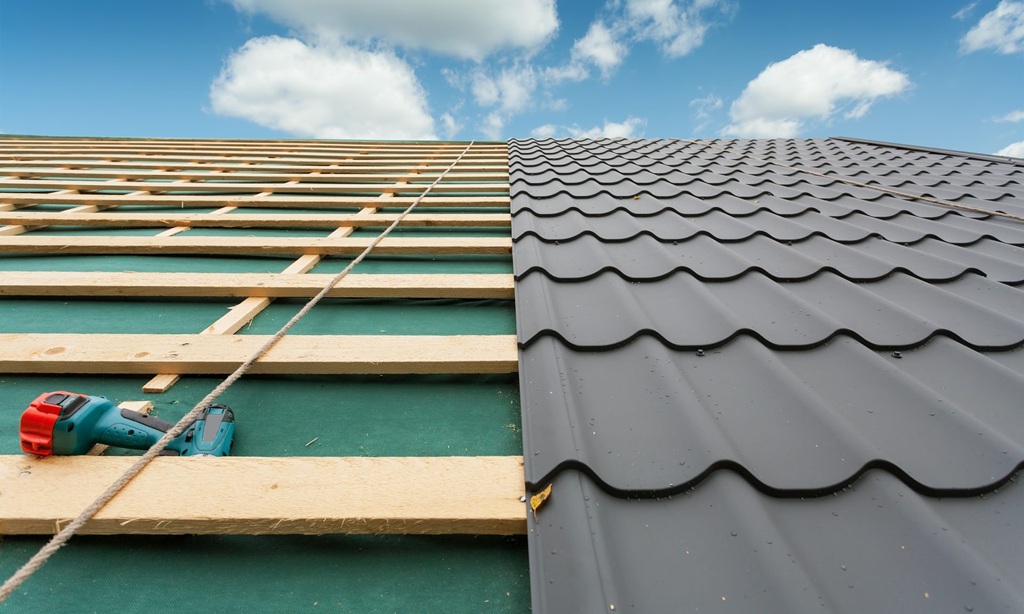

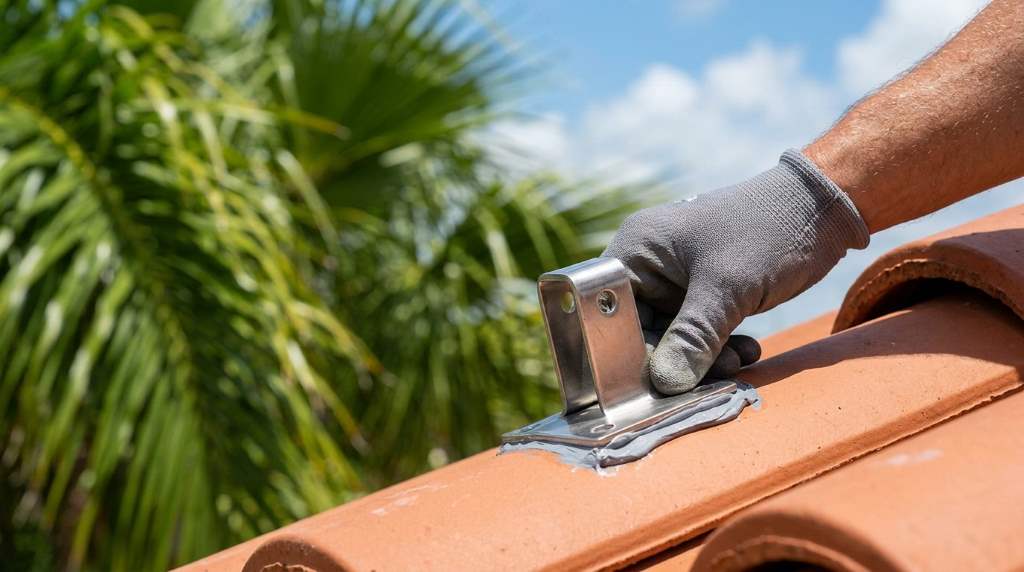
Preventing rust under roof hardware in Tampa starts with sealing penetrations, isolating dissimilar metals, and controlling trapped moisture. Tampa receives roughly 50 inches of rain annually, while Florida’s extensive coastline increases exposure to salt-laden air. Therefore, even small installation weaknesses can accelerate corrosion beneath brackets, fasteners, and mounts. Proper starlink pivot mount install practices also matter when roof hardware requires new penetrations.
Key Takeaways
- Choose corrosion-resistant hardware designed for humid, coastal environments.
- Seal every roof penetration correctly to prevent moisture from reaching fasteners.
- Separate incompatible metals to reduce galvanic corrosion around mounting points.
- Inspect roof hardware after severe storms and during regular roof maintenance.
- Remove debris that traps moisture against brackets, screws, and flashing.
- Replace compromised fasteners before surface rust develops into structural corrosion.
Why Tampa Roof Hardware Develops Rust So Quickly
Tampa’s climate creates several conditions that encourage corrosion around roof-mounted hardware. Frequent rainfall, high humidity, intense sunlight, and coastal air continually challenge exposed metal components. Additionally, moisture can remain underneath brackets when installers leave narrow gaps without proper drainage.
Salt particles make this problem more aggressive because dissolved salts increase electrical conductivity on wet metal surfaces. Consequently, exposed steel hardware can corrode faster when airborne salt combines with rainwater. Homes closer to Tampa Bay or the Gulf may face greater exposure than properties farther inland.
Roof movement also contributes to the problem because thermal expansion repeatedly stresses seals around mounting points. Over time, small cracks can develop around washers, flashing, or sealant. Water then reaches concealed metal surfaces where corrosion can progress unnoticed.
Moreover, debris creates another hidden moisture source beneath roof hardware. Leaves, pine needles, dirt, and organic material can hold water against metal after rainfall. Regular roof cleaning helps reduce this moisture retention and supports longer-lasting hardware.
Choose Hardware That Resists Tampa’s Climate
The simplest prevention strategy starts with selecting suitable materials before installation. Stainless steel, hot-dip galvanized steel, aluminum, and other corrosion-resistant materials can provide better performance when properly specified.
However, material selection alone does not guarantee corrosion resistance. For example, installers must consider fasteners, washers, brackets, flashing, and mounting plates as one connected system. Mixing incompatible metals can create galvanic corrosion when moisture provides an electrical pathway.
Therefore, match hardware materials carefully and use compatible protective coatings where necessary. A qualified installer should also follow the manufacturer’s approved fastener and flashing requirements. These details matter because a strong bracket can still fail when its attachment hardware deteriorates.
Before installation, inspect every component for scratches, exposed steel, damaged coatings, or manufacturing defects. Even small coating failures can become starting points for corrosion. Replace questionable components instead of relying on sealant to hide their weaknesses.
Prioritize Stainless Steel Where Exposure Demands It
Stainless steel often provides excellent corrosion resistance for exterior roof applications. Nevertheless, not every stainless-steel grade performs identically under humid or salty conditions. Select the grade according to exposure conditions, manufacturer guidance, and the specific roof system.
Likewise, galvanized hardware can perform well when installers protect its coating during installation. Cutting, grinding, or aggressively scratching galvanized surfaces exposes underlying steel. Protect damaged areas using an appropriate compatible repair coating rather than leaving bare metal exposed.
Seal Roof Penetrations Before Water Finds Them
Every roof penetration creates a potential pathway for water, so installers must treat each one carefully. Proper flashing should direct water away from penetrations instead of forcing sealant to perform every waterproofing function. For broader roof maintenance considerations, review these essential reasons cleaning roof practices.
Installers should position flashing correctly beneath or around the roofing materials according to the roof design. Then, they should apply compatible sealants only where the roofing manufacturer permits their use. This approach creates layered protection rather than depending on one bead of caulk.
Sealant also requires careful selection because ultraviolet exposure can degrade unsuitable products. Choose a sealant rated for exterior roofing conditions and compatible with the surrounding membrane or shingles. Avoid applying random household caulk around expensive roof equipment.
Additionally, keep fastener penetrations clean before applying compatible sealant. Dust, moisture, and loose roofing granules can weaken adhesion. A clean, dry surface gives the sealant a much better opportunity to form a durable bond.
Never Treat Sealant as the Only Waterproofing Layer
Sealant provides useful protection, but it should complement proper flashing and mechanical installation. Overreliance on caulk can create problems when movement, ultraviolet exposure, or weather eventually damages the seal.
Inspect existing sealant for cracking, shrinking, separation, or unusual discoloration. If damage appears, identify the underlying water-entry problem before applying another layer. Simply covering failed sealant can trap moisture and conceal worsening corrosion.
Prevent Galvanic Corrosion Around Mounting Points
Galvanic corrosion occurs when dissimilar metals contact each other while moisture creates an electrochemical pathway. Roof hardware can therefore corrode even when individual components appear highly corrosion-resistant.
For instance, aluminum components contacting certain steel hardware can create corrosion concerns under persistent moisture exposure. Installers can reduce this risk by selecting compatible materials or using suitable isolation methods. Manufacturer-approved washers, coatings, gaskets, or barriers can help separate incompatible surfaces.
However, isolation materials must remain durable under rooftop temperatures and weather exposure. Cheap materials may compress, deteriorate, or move after repeated thermal cycles. Use products specifically suited to exterior roofing applications rather than improvised household materials.
Also inspect contact points whenever you examine the roof hardware. Look for white powdery deposits on aluminum, reddish-brown staining on steel, or coating deterioration. These signs can indicate developing corrosion before significant structural damage occurs.
Control Moisture Around Brackets and Fasteners
Good drainage matters just as much as good materials. Hardware should not create pockets where rainwater can collect against roofing surfaces or metal components.
During installation, maintain appropriate clearances and drainage paths around brackets when the roof system allows them. Avoid placing hardware where leaves and debris naturally accumulate. Small design decisions can significantly reduce the amount of time metal remains wet.
Furthermore, check nearby gutters, valleys, and roof slopes for drainage problems. Overflowing water can repeatedly soak hardware that normally receives limited exposure. Correcting drainage issues protects both the roof covering and its mounted equipment.
Keep Debris Away From Hardware
Debris can remain surprisingly wet after the surrounding roof has already dried. Consequently, hardware surrounded by organic material may experience prolonged corrosion exposure.
Remove leaves, branches, dirt, and other debris during routine inspections. Work carefully around flashing and mounted equipment to avoid damaging seals or protective coatings. Never scrape aggressively across metal surfaces merely to remove stuck debris.
Cleaning also gives you an opportunity to detect early corrosion. Look beneath brackets, around washers, and near screw heads because these locations often reveal problems first. Early intervention usually costs less than repairing damaged roofing or replacing failed mounting systems.
Inspect Roof Hardware Before Small Rust Spots Spread
A practical inspection schedule helps homeowners identify corrosion before it compromises the roof assembly. Examine exposed hardware at least during routine roof maintenance and after significant storms.
Start by checking visible fastener heads, brackets, washers, flashing edges, and mounting plates. Next, examine nearby roofing materials for rust stains or unexplained discoloration. Such staining can indicate corrosion developing around concealed hardware.
Also watch for loose brackets, lifted flashing, cracked sealant, and movement around mounting points. Hardware should remain stable without shifting when the equipment operates or encounters ordinary weather. Any unexpected movement deserves professional evaluation.
After hurricanes or severe thunderstorms, inspect the entire mounting area for impact or wind-related damage. Strong winds can loosen components even when they remain visually intact. Prompt repairs can prevent water intrusion during subsequent rainfall.
Know the Warning Signs
Several symptoms can indicate that roof hardware needs attention:
- Reddish-brown staining appears below screws or brackets.
- Metal surfaces develop bubbling, flaking, or peeling coatings.
- Fastener heads become visibly pitted or misshapen.
- Sealant separates from the hardware or roofing surface.
- Flashing develops gaps, lifted edges, or unusual movement.
- Water stains appear inside the building near mounting locations.
When these signs appear, avoid simply painting over the affected metal. Determine whether corrosion remains superficial or has penetrated the component. A professional assessment can prevent a cosmetic repair from becoming a larger structural problem.
Repair Rusted Hardware Without Creating New Roof Damage
Minor surface rust may sometimes allow cleaning and component treatment, depending on the hardware and manufacturer’s requirements. Severely corroded fasteners should generally receive replacement rather than cosmetic treatment.
When replacement requires disturbing roofing materials, proceed carefully to protect surrounding shingles, membranes, or flashing. Improper removal can create new penetrations or damage existing waterproofing layers.
Budget concerns should not encourage shortcuts around roof penetrations. Instead, homeowners can explore repair roof budget methods while preserving proper waterproofing standards.
During repairs, replace compromised washers, seals, or flashing whenever they no longer provide reliable protection. Reusing damaged components can undermine otherwise excellent replacement hardware. Always follow the roofing and equipment manufacturer’s installation requirements.
Build a Long-Term Roof Hardware Maintenance Plan
Rust prevention works best as a maintenance system rather than a one-time treatment. Create a simple inspection routine that covers hardware condition, sealant, flashing, drainage, and nearby roofing materials.
Schedule inspections before the wetter months and after major storms whenever practical. Additionally, inspect areas where vegetation or debris regularly collects. Consistent attention allows homeowners to address minor corrosion before it reaches concealed connections.
Keep records of installation dates, hardware materials, repairs, and replacement components. This information helps future contractors understand the roof assembly before they modify existing equipment. It also reduces the risk of incompatible replacement parts.
Finally, consider professional inspections when hardware sits near difficult-to-access roof areas. Walking carelessly across a roof can damage roofing materials or create personal safety risks. Professional roofers can evaluate inaccessible areas while following appropriate safety practices.
When Should You Call a Roofing Professional?
Professional help becomes especially important when rust appears around flashing, penetrations, or structural mounting points. These areas can conceal water intrusion that ordinary visual inspections cannot confirm.
Call a qualified roofing professional when hardware feels loose, flashing moves, interior staining appears, or corrosion reaches structural components. Likewise, seek professional evaluation when you cannot identify compatible replacement hardware.
A professional should evaluate the complete assembly instead of replacing only the most visibly damaged screw. This approach helps identify moisture pathways, incompatible metals, drainage problems, and installation defects. Consequently, the repair addresses the cause rather than merely the visible symptom.
Protect Your Tampa Roof Before Rust Becomes a Bigger Problem
Preventing rust under roof hardware requires thoughtful material selection, reliable waterproofing, proper drainage, and consistent inspections. Tampa’s wet, humid environment makes these practices particularly important for long-term roof performance.
Start by examining existing hardware for corrosion, trapped debris, damaged sealant, and loose connections. Then address problems using compatible materials and manufacturer-approved installation methods. If corrosion has reached flashing or structural attachment points, arrange a professional inspection promptly.
A small rust spot can provide an early warning rather than an immediate disaster. By responding early, homeowners can protect the roof assembly, mounted equipment, and interior spaces from more expensive damage. Take action now and schedule a professional roof hardware inspection before the next major storm.
Frequently Asked Questions
What causes roof hardware to rust in Tampa?
Humidity, frequent rain, salt-laden air, trapped moisture, and incompatible metals commonly accelerate roof hardware corrosion in Tampa.
Is stainless steel better for Tampa roof hardware?
Yes, properly selected stainless steel generally offers strong corrosion resistance for many humid and coastal roofing applications.
Can roof sealant stop hardware from rusting?
Sealant can reduce moisture exposure, but proper flashing, compatible materials, drainage, and installation remain essential.
How often should Tampa roof hardware receive inspection?
Inspect roof hardware during routine maintenance and after major storms, especially when equipment sits near coastal exposure.
Should I replace rusty roof screws?
Replace significantly corroded screws with compatible hardware instead of covering advanced corrosion with paint or additional sealant.