

Selecting the right range hood for your kitchen is more complicated than many homeowners realize. This decision affects not only your cooking experience but also your home’s air quality, energy costs, and even your property value. Understanding the differences between ducted and ductless systems helps you make an informed choice that fits your specific situation.
Many people feel overwhelmed when comparing these two options. Each system has distinct advantages and limitations that make it suitable for different kitchens and cooking styles. This guide breaks down everything you need to know about both types of range hoods so you can choose confidently.
Understanding How Range Hoods Work
Before diving into the comparison, it’s helpful to understand what range hoods actually do. These appliances serve a critical function in your kitchen by removing smoke, steam, grease particles, and cooking odors from the air. They also help control heat and humidity that builds up during cooking.
Range hoods use fans to pull air away from your cooking surface. However, what happens to that air after it’s captured determines whether you have a ducted or ductless system. This fundamental difference affects performance, installation requirements, and ongoing maintenance needs.
The effectiveness of any range hood depends on proper sizing, adequate airflow capacity, and correct placement above your cooktop. Regardless of which type you choose, these basic factors remain important for optimal performance.
What Makes Ducted Range Hoods Different
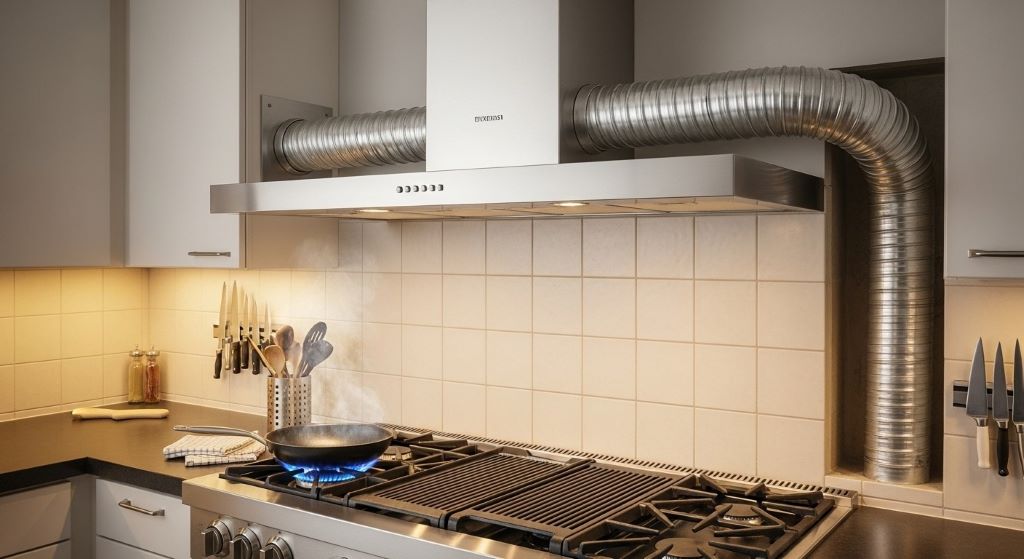
Ducted systems, often called vented systems, physically remove contaminated air from your home. These hoods connect to ductwork that channels air outside through an exterior wall or your roof. Once the air leaves your home, it’s gone completely along with all the smoke, grease, and odors it contains.
This direct ventilation approach offers the most thorough air cleaning available. Nothing gets recycled back into your kitchen. The air you breathe stays fresher, and your kitchen surfaces accumulate less grease film over time.
Installation requires creating a pathway from your range hood to the outdoors. This might involve running ducts through walls, cabinets, or attic spaces. The complexity of installation varies significantly based on your kitchen’s location and your home’s structure.
Exploring Vented Hood Benefits
The primary advantage of ducted systems is their superior performance. They remove 100 percent of cooking byproducts from your home rather than filtering and returning them. This complete removal makes a noticeable difference, especially if you cook frequently or prepare foods that generate significant smoke and odors.
These systems handle high-heat cooking particularly well. If you sear steaks, stir-fry at high temperatures, or use a wok regularly, a ducted hood manages the intense smoke and steam these cooking methods produce. The system simply exhausts everything outside without struggling to filter it.
Energy efficiency represents another benefit. Ducted hoods don’t need to work as hard to achieve results. Once air gets pulled through the fan, the job is done. There are no filters restricting airflow or requiring the motor to work harder.
Additionally, these systems don’t add heat back into your kitchen. During summer months, this characteristic helps keep your cooking space cooler. The hot air from cooking goes directly outside rather than being filtered and returned to the room.
Maintenance requirements are generally simpler with ducted systems. You’ll need to clean or replace grease filters that catch particles before they enter the ductwork. However, these filters are easier to maintain than the charcoal filters used in ductless systems.
Understanding Ductless Range Hood Systems
Ductless range hoods take a completely different approach to managing cooking byproducts. These systems, sometimes called recirculating hoods, pull air through filters and then return the cleaned air to your kitchen. No air actually leaves your home.
This design uses multiple filtration stages to clean the air. Metal mesh filters capture grease particles first. Then activated charcoal filters absorb odors and some gaseous pollutants. The filtered air then gets blown back into your kitchen from the top or front of the hood.
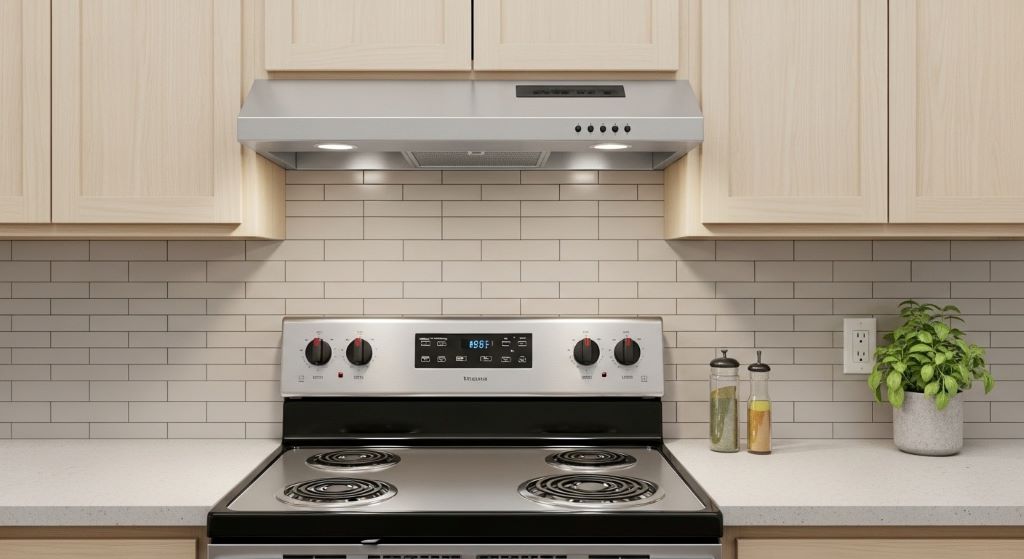
Installation is considerably simpler because no ductwork is required. You need electrical power and proper mounting support, but that’s essentially it. This simplicity makes ductless hoods attractive for many situations where ducted installation would be difficult or impossible.
When a Recirculating Hood Makes Sense
Several scenarios make ductless systems the practical or only choice available. Understanding these situations helps you recognize when this option suits your needs.
Apartment living often necessitates ductless systems. Most rental properties don’t allow tenants to modify walls or install exterior venting. A recirculating hood provides the only viable option for improving air quality while cooking.
Kitchen islands present another common scenario. Running ductwork to an island hood involves significant construction, expense, and sometimes structural complications. Ductless island hoods avoid these challenges entirely while still providing some air cleaning capability.
Historic homes or buildings with preservation restrictions might prohibit exterior modifications. Adding vents to protected exteriors isn’t possible, making ductless systems the only permitted solution.
Budget constraints sometimes drive the decision toward ductless models. The lower installation costs make these systems accessible to homeowners who can’t afford extensive ductwork installation. The hoods themselves also typically cost less than comparable ducted models.
Condominiums often have building restrictions on exterior modifications or limited options for venting placement. These restrictions can make ducted installation impractical or impossible, leaving ductless as the default choice.
Comparing Performance and Effectiveness
Understanding the performance differences between these systems is crucial for setting realistic expectations. Ducted systems consistently outperform ductless models in removing cooking byproducts from your kitchen.
The difference becomes particularly noticeable with heavy cooking. Frying foods, cooking with strong spices, or preparing fish creates odors and particles that challenge any filtration system. Ducted hoods handle these situations significantly better by completely removing contaminated air.
Ductless systems face inherent limitations. Charcoal filters can only absorb so much before becoming saturated. Once saturated, they become less effective at removing odors. Moreover, these filters don’t capture all types of pollutants, and some microscopic particles pass through and return to your kitchen.
Steam and humidity present another consideration. Ducted systems remove moisture from your kitchen, preventing condensation on windows and cabinets. Ductless systems return that humidity to the room, which can contribute to mold growth and damage to cabinets over time.
However, ductless technology has improved considerably in recent years. Modern systems with high-quality filters perform better than older models. They work adequately for light to moderate cooking in many households.
Installation Considerations for Each Type
Installation complexity and cost vary dramatically between these two options. Understanding what’s involved helps you budget appropriately and anticipate potential challenges.
Ducted installations require professional expertise in most cases. The installer must determine the best path for ductwork, ensure proper sizing, maintain appropriate slope for condensation drainage, and create a weatherproof exterior termination. Costs typically range from several hundred to several thousand dollars depending on complexity.
The shortest possible duct run performs best. Every elbow or turn reduces efficiency by restricting airflow. Ideally, ductwork should be straight or have minimal bends. Additionally, smooth metal ducting outperforms flexible ducting for maintaining strong airflow.
Ductless installations are considerably simpler. Many homeowners with basic DIY skills can handle the installation themselves. The process involves mounting the hood securely, connecting electrical power, and installing filters. Professional installation is still advisable for ensuring safe electrical connections and proper mounting.
Both systems require sufficient clearance above your cooking surface. Check manufacturer specifications for required distances, which vary based on the type of cooktop you have and the hood’s design.
Maintenance Requirements and Long-Term Costs
Ongoing maintenance affects the true cost of ownership for either system. Understanding these requirements helps you choose a hood you’ll actually maintain properly.
Ducted hoods require regular cleaning of metal grease filters. These filters should be washed monthly with most cooking habits. Some models have dishwasher-safe filters for easy cleaning. Periodically, you should also check ductwork for grease buildup and clean it as needed.
Ductless systems need more frequent and involved maintenance. Grease filters require the same monthly cleaning as ducted models. However, charcoal filters must be replaced regularly, typically every three to six months depending on usage. These replacement filters represent an ongoing expense that adds up over the hood’s lifetime.
The quality of charcoal filters varies significantly. Premium filters last longer and work better than cheap alternatives. However, they also cost more. Budget for this recurring expense when considering a ductless system.
Motor longevity can differ between the two types. Ducted systems often experience less strain because air flows more freely without multiple filters restricting it. This reduced strain may extend motor life, though quality of construction matters more than system type for motor durability.
Energy Efficiency and Operating Costs
Energy consumption affects your monthly utility bills, making it worth consideration in your decision process. Both system types use electricity to power fans and lights, but consumption patterns differ.
Ducted systems typically use less energy for equivalent air movement. Without dense filters restricting airflow, the motor doesn’t work as hard to move air. This efficiency can translate to lower electricity costs over time.
However, ducted systems do remove conditioned air from your home. During heating or cooling seasons, this expelled air takes your home’s comfortable temperature with it. Your HVAC system must then work harder to maintain your desired temperature. This factor partially offsets the energy efficiency of the hood itself.
Ductless systems avoid this conditioned air loss by returning filtered air to the kitchen. In climates with extreme temperatures, this characteristic can reduce heating and cooling costs. The energy required to run the fan might be offset by HVAC savings.
Modern range hoods increasingly include energy-efficient LED lighting and variable speed motors. These features reduce energy consumption regardless of whether the system is ducted or ductless.
Noise Levels and Kitchen Comfort
The sound your range hood makes affects your overall kitchen experience. Nobody wants a deafeningly loud fan drowning out conversation during dinner preparation.
Noise levels depend more on fan quality, motor design, and CFM rating than whether the system is ducted or ductless. However, some patterns do emerge between the two types.
Ductless systems sometimes produce slightly more noise because air moves through multiple dense filters. The motor works harder to pull air through this resistance, potentially creating more sound. However, quality ductless hoods with powerful motors can be surprisingly quiet.
Ducted systems can transmit sound through ductwork if not properly installed. Sound insulation around ducts and proper mounting help minimize this issue. Exterior wall caps should also be designed to prevent wind noise from traveling back through the duct.
Most manufacturers list noise ratings in sones. Lower numbers indicate quieter operation. Look for hoods rated at six sones or less for comfortable kitchen use. Premium models often operate at three sones or less even at higher speeds.
Aesthetic and Design Considerations
Your range hood is a prominent visual element in your kitchen. Style, finish, and design matter beyond just functionality.
Both ducted and ductless systems come in various styles including under-cabinet, wall-mounted, and island models. Your choice between ducted and ductless doesn’t necessarily limit your aesthetic options.
However, ductless systems offer more flexibility in placement since they don’t require exterior access. This freedom can influence your kitchen design, particularly for islands or unusual layouts.
Some high-end designer hoods are only available as ducted models. Manufacturers of premium products often focus on ducted systems because serious home cooks who invest in expensive hoods typically want maximum performance.
Ductless hoods are typically bulkier because they house filtration components internally. This extra depth might affect how they fit in your space, particularly under cabinets with limited clearance.
Making the Right Choice for Your Situation
Several factors should influence your final decision. Consider your specific circumstances rather than assuming one type is universally better.
Your cooking habits matter significantly. If you cook daily, prepare foods that generate lots of smoke, or enjoy high-heat cooking techniques, a ducted system provides noticeably better performance. Light cooking or mostly microwave use might not justify the expense of ducted installation.
Building constraints might make the decision for you. If ducted installation is impossible or prohibitively expensive, a quality ductless system serves you better than no ventilation at all.
Budget considerations include both upfront and long-term costs. Ducted systems cost more initially but may be cheaper over time without recurring filter replacement costs. Calculate the total five-year or ten-year cost for a realistic comparison.
Local building codes might have requirements or restrictions affecting your choice. Some jurisdictions mandate exterior venting for certain types of cooking equipment. Check regulations before deciding.
Future home sale considerations may influence your decision. Ducted systems typically add more value to a home because buyers perceive them as superior. However, this factor matters less if you plan to stay in your home long-term.
Hybrid Solutions and Alternative Options
Some situations call for creative solutions that don’t fit neatly into either category. Knowing your options helps you find the best solution.
Convertible range hoods can operate as either ducted or ductless. These versatile units let you install ductwork later if it’s not feasible initially. You can start with ductless operation and convert when circumstances change.
Downdraft ventilation systems offer another alternative. These systems pull air downward and can vent outside or recirculate. They work well for islands or peninsula installations where traditional overhead hoods aren’t desired.
Makeup air systems address the air replacement issue with ducted hoods. When large quantities of air get exhausted outside, makeup air systems bring fresh air back in to maintain proper home pressurization. These systems are required by code in some jurisdictions when high-capacity hoods are installed.
Conclusion
Choosing between ducted and ductless range hoods requires careful consideration of multiple factors. Vented hood benefits include superior performance, complete removal of cooking byproducts, and simpler long-term maintenance. These advantages make ducted systems the preferred choice when installation is feasible and budget allows.
However, a recirculating hood offers practical solutions for situations where ducted installation isn’t possible or cost-effective. Modern ductless systems provide adequate performance for many cooking styles, particularly light to moderate use. Their installation simplicity and flexibility make them valuable options for apartments, islands, and budget-conscious homeowners.
Neither option is universally superior. The best choice depends on your specific cooking habits, kitchen layout, building constraints, and budget. Consider both immediate costs and long-term expenses when making your decision. Think honestly about your cooking frequency and the types of foods you prepare most often.
If possible, prioritize ducted installation for the best long-term performance and satisfaction. When that’s not feasible, choose a high-quality ductless system with good filtration and adequate CFM rating for your cooking surface. Either way, proper installation and regular maintenance ensure you get the best performance possible from your investment.
Frequently Asked Questions
Can I convert a ductless range hood to ducted later?
Some range hoods are designed as convertible models that can operate either way. Check your hood’s specifications or manual to see if this option exists. If your current hood isn’t convertible, you’ll need to purchase a new ducted model. Installing ductwork is possible later, but buying a convertible hood initially gives you flexibility if you’re uncertain about future ductwork installation.
How often do I really need to replace charcoal filters in a ductless system?
Filter replacement frequency depends on your cooking habits and the manufacturer’s specifications. Heavy daily cooking requires replacement every three to four months. Light cooking might extend filter life to six months. However, don’t stretch replacement intervals too far. Saturated filters become ineffective at removing odors and can restrict airflow, making the motor work harder. Set calendar reminders to stay on schedule.
What CFM rating do I need for my range hood?
CFM (cubic feet per minute) measures airflow capacity. The general rule suggests 100 CFM per linear foot of cooking surface for wall-mounted hoods, and 150 CFM per linear foot for island hoods which need more power. Therefore, a 30-inch range requires at least 250 CFM for a wall installation. High-BTU gas cooktops need even more capacity. Check your cooktop’s BTU output and hood manufacturer’s recommendations for proper sizing.
Will a ducted range hood make my home too cold by expelling heated air?
Ducted hoods do remove conditioned air from your home, but the impact on heating costs is usually minor unless you run the hood constantly on high speed. Use the hood only while cooking and shortly after to minimize air loss. Variable speed controls let you use lower settings that move less air when full power isn’t needed. In newer, tightly sealed homes with powerful hoods, a makeup air system might be needed to prevent negative pressure issues.
Are ductless range hoods worth having, or should I skip ventilation entirely?
Ductless systems are definitely worth having even though they don’t match ducted performance. They capture grease particles that would otherwise coat your kitchen surfaces, reduce cooking odors significantly, and improve air quality compared to no ventilation. While they’re not perfect, they’re substantially better than nothing. If ducted installation isn’t feasible, installing a quality ductless hood with good filters provides meaningful benefits for your kitchen and home.
Related Topics:
How to Hide Gap Between Dishwasher and Cabinet: 5 Professional Methods That Actually Work
7 Simple Hacks to Maintain Kitchen Appliances Running Smoothly

