
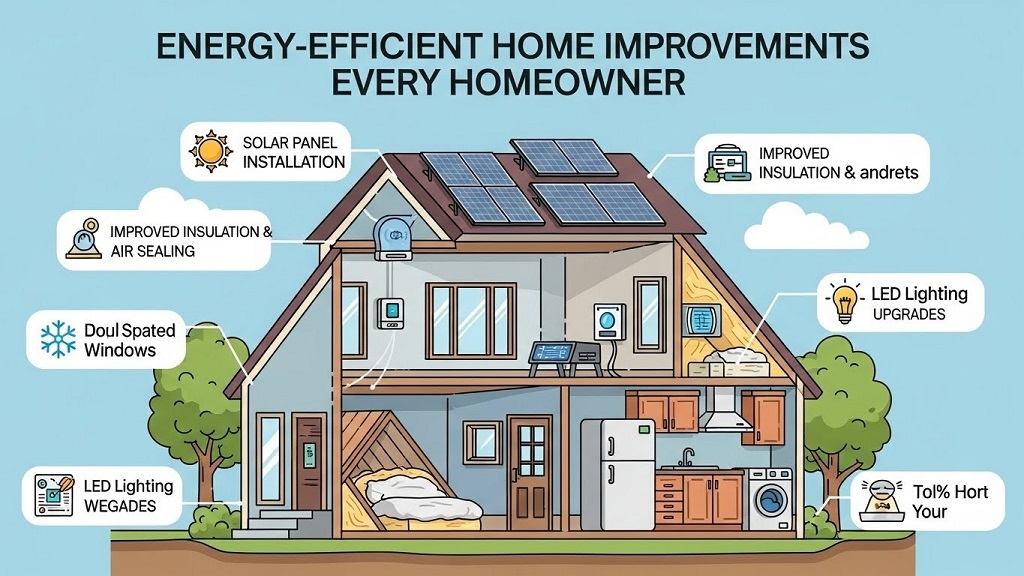
Energy-Efficient Home Improvements are upgrades designed to reduce the amount of energy your home consumes while maintaining or improving comfort. In simple terms, they help your house do more with less energy.
With rising electricity, gas, and heating costs, homeowners are actively looking for practical ways to reduce expenses. This is where energy-efficient solutions become essential. From insulation and smart appliances to renewable energy systems, these improvements directly help lower energy bills while creating a more comfortable living environment.
Beyond monthly savings, energy-efficient homes are healthier, quieter, and more environmentally responsible. They reduce carbon emissions, improve indoor air quality, and increase long-term property value. According to modern homeownership trends, buyers increasingly prefer homes with built-in energy efficiency.
This guide answers the most common homeowner questions about energy efficiency. You will learn which improvements matter most, how they work, and how to prioritize upgrades based on budget and impact. If your goal is to save money, increase comfort, and future-proof your home, these energy-saving home upgrades are worth understanding.
How Does Proper Insulation Improve Energy Efficiency?

Short answer: Insulation prevents heat loss in winter and heat gain in summer, reducing energy waste.
Insulation is the foundation of all Energy-Efficient Home Improvements. Without it, heating and cooling systems must work harder to maintain comfortable temperatures, leading to higher energy consumption.
Key areas that require insulation include attics, walls, basements, crawl spaces, and floors. Poorly insulated homes lose a significant amount of energy through the roof and exterior walls. Even small gaps can cause noticeable temperature fluctuations.
- Reduces heating and cooling demand
- Improves indoor temperature consistency
- Extends HVAC system lifespan
- Delivers immediate energy savings
Sealing air leaks with caulking and weather stripping further enhances insulation performance. Together, these upgrades can reduce energy use by up to 30%, making insulation one of the most cost-effective energy-saving home upgrades available.
Which Windows and Doors Are Best for Energy Efficiency?
Short answer: Double or triple-pane windows with Low-E coatings offer the highest energy savings.
Windows and doors play a major role in regulating indoor temperature. Older single-pane windows allow heat to escape in winter and enter during summer, increasing energy usage.
Energy-efficient windows use insulated glass units, gas-filled panes, and Low-E coatings to reflect heat while allowing natural light. Energy-efficient doors use insulated cores and tight seals to prevent air leakage.
- Reduces drafts and outdoor noise
- Improves year-round comfort
- Minimizes UV damage to furniture
- Enhances home resale value
While window and door upgrades require upfront investment, they deliver long-term energy savings and significantly improve home comfort.
How Do Energy-Efficient Appliances Lower Energy Bills?
Short answer: They perform the same tasks using less electricity and water.
Household appliances account for a large portion of home energy use. Older models consume excessive power compared to modern, energy-efficient alternatives.
ENERGY STAR–certified appliances are designed to minimize energy waste without compromising performance. Refrigerators, washing machines, dishwashers, and dryers are some of the biggest opportunities for savings.
| Appliance | Estimated Energy Savings |
|---|---|
| Refrigerator | 30–40% |
| Washing Machine | 25–35% |
| Dishwasher | 20–30% |
Replacing inefficient appliances is one of the most practical Energy-Efficient Home Improvements because the savings begin immediately after installation.
Why Is LED Lighting One of the Easiest Energy-Saving Home Upgrades?
Short answer: LED bulbs use up to 80% less energy and last significantly longer.
Lighting upgrades offer one of the fastest returns on investment. Traditional incandescent bulbs waste energy as heat, while LED bulbs convert most energy into light.
- Consumes far less electricity
- Lasts up to 15 times longer
- Produces minimal heat
- Available in multiple brightness and color options
Switching to LED lighting throughout your home can reduce lighting costs dramatically and improve overall energy efficiency with minimal effort.
How Does Smart Home Technology Improve Energy Efficiency?
Short answer: Smart systems optimize energy usage automatically.
Smart home technology allows homeowners to monitor and control energy consumption in real time. Devices such as smart thermostats, smart plugs, and energy monitoring systems adjust usage based on occupancy and behavior.
Smart thermostats, for example, learn your schedule and adjust heating or cooling when rooms are not in use.
- Prevents unnecessary energy consumption
- Allows remote control via smartphone
- Provides detailed energy usage insights
- Improves comfort without manual adjustments
These technologies are increasingly popular because they combine convenience with measurable energy savings.
Is Solar Energy a Smart Energy-Efficient Home Improvement?
Short answer: Yes, solar power significantly reduces reliance on grid electricity.
Solar energy is one of the most powerful energy-saving home upgrades available. Solar panels convert sunlight into electricity, reducing monthly utility costs and providing long-term energy independence.
- Lowers electricity bills over time
- Reduces environmental impact
- Increases property value
- Offers long-term energy stability
Although installation costs are higher, solar systems deliver substantial returns through savings, incentives, and long-term durability.
Conclusion: Why Energy-Efficient Home Improvements Are Worth It
Energy-Efficient Home Improvements are not just about saving money—they are about building a smarter, more comfortable, and more sustainable home. From insulation and efficient appliances to smart technology and renewable energy, each upgrade contributes to long-term value.
Energy-saving home upgrades help lower energy bills, improve indoor comfort, and protect against rising utility costs. The best part is that homeowners can implement these improvements gradually, based on budget and priorities.
Call to Action: Start with an energy assessment of your home today. Identify areas of energy waste and take the first step toward a more efficient, cost-effective, and future-ready home.
Frequently Asked Questions About Energy-Efficient Home Improvements
What is the most affordable energy-efficient home improvement?
LED lighting and air sealing are among the most affordable and impactful Energy-Efficient Home Improvements.
How long does it take to see savings?
Many homeowners notice reduced energy bills within the first month, with full ROI typically achieved within 2–5 years.
Do energy-efficient upgrades increase home value?
Yes, energy-efficient homes are more attractive to buyers and often sell at higher prices.
Are smart thermostats worth the investment?
Yes, smart thermostats can reduce heating and cooling costs by optimizing energy usage automatically.
Can energy-efficient upgrades be done gradually?
Absolutely. Homeowners can prioritize upgrades over time based on budget and energy goals.
Do energy-efficient homes require special maintenance?
No. Most energy-efficient upgrades require minimal maintenance and often reduce overall system wear.
Related Topics: Professional Bathroom Renovation Services for Stylish Homes
What Next: How Much Does It Cost to Replace an Exterior Door and Frame in 2025?