

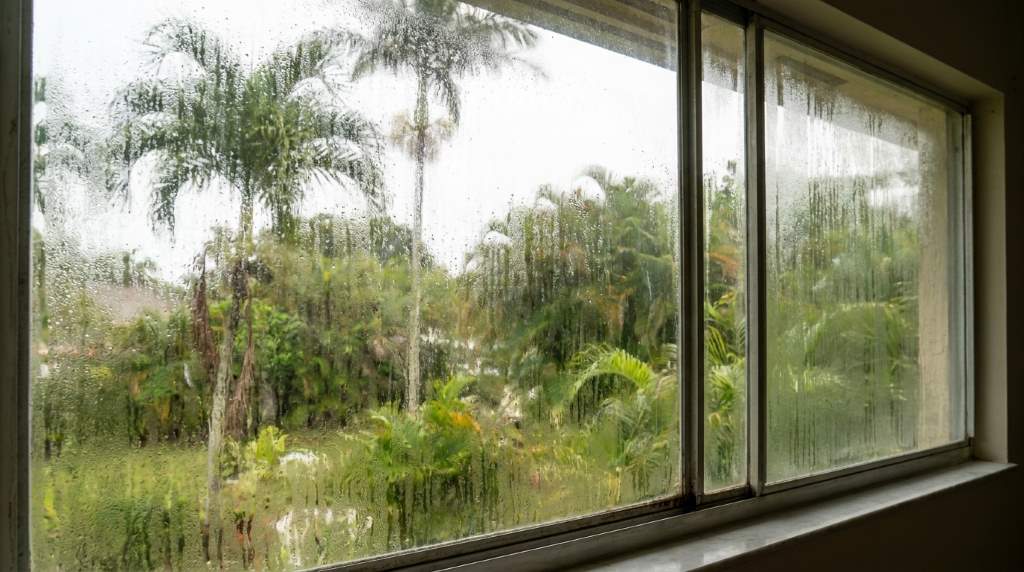
Fogged glass spreads in Miami because failed window seals let humid air enter insulated glass units. Miami averages roughly 75% relative humidity, which accelerates condensation problems when seals weaken. However, DIY window pane repair will not solve sealed-unit failure. The real solution depends on identifying moisture entry before replacing the wrong component.
Key Takeaways
- Fogging usually indicates moisture inside an insulated glass unit.
- Miami’s humidity and heat can accelerate seal deterioration.
- Widespread fogging often signals multiple aging or damaged window units.
- Cleaning the glass surface cannot remove moisture trapped between panes.
- Early diagnosis can prevent unnecessary frame or window replacement.
- Professional replacement often works better than temporary defogging.
What Causes Fogged Glass to Spread in Miami?
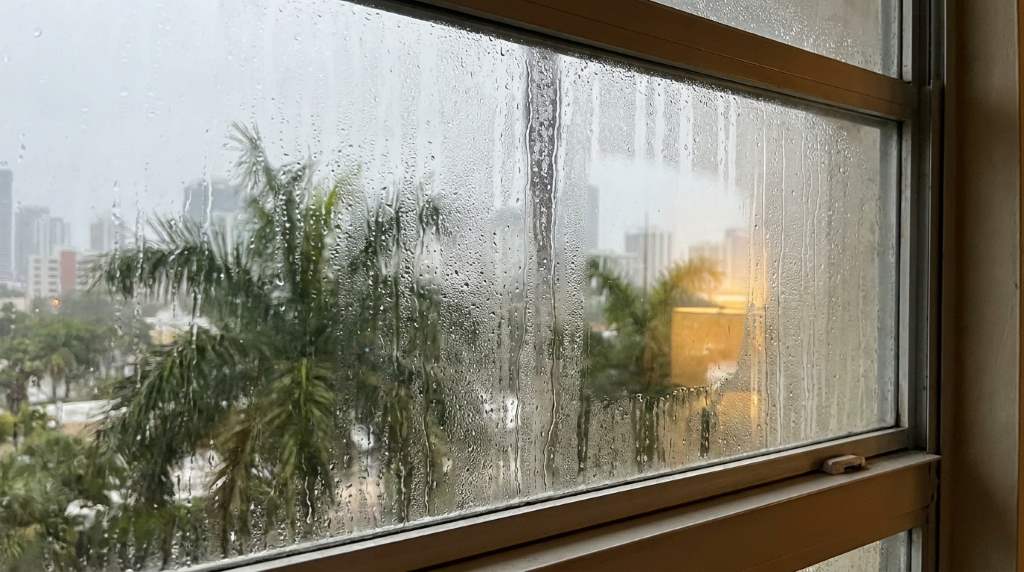
Fogged glass typically starts when an insulated glass unit loses its airtight seal. Once the seal fails, humid outdoor air can enter the space between panes. Consequently, condensation forms inside the glass assembly instead of on its exterior surface.
Miami creates especially demanding conditions for residential windows throughout the year. High humidity, intense sunlight, frequent storms, and temperature changes continually stress window materials. Therefore, small seal weaknesses can gradually develop into visible moisture problems.
Modern insulated windows rely on sealed spaces to improve thermal performance and reduce heat transfer. These spaces commonly contain insulating gas or simply dry air. When the seal fails, moisture replaces that controlled environment and creates persistent haze.
The problem can appear gradually rather than immediately. Initially, you might notice a faint cloudy area around one corner. Eventually, mineral deposits, streaks, and water droplets can make the entire pane look permanently dirty.
Importantly, fogging usually spreads across individual glass units rather than randomly across every window. However, several windows may fail around the same period when they share age, materials, or installation conditions.
That pattern helps homeowners distinguish isolated glass failure from a broader window maintenance issue. It also prevents unnecessary replacement of perfectly functional frames and surrounding structures.
Why Humidity Matters So Much
Warm air can hold substantial moisture, while cooler glass surfaces encourage condensation. Miami’s consistently warm climate keeps moisture levels high around windows. Meanwhile, interior air conditioning creates temperature differences across glass surfaces.
Those conditions increase stress on aging seals and window components. Furthermore, repeated heating and cooling cycles cause materials to expand and contract. Over time, that movement can weaken sealant performance.
How Miami Weather Accelerates Window Seal Failure
Miami windows face more environmental stress than windows in many milder climates. Strong ultraviolet exposure can gradually degrade exterior sealants and surrounding materials. Likewise, tropical storms introduce wind-driven rain that tests vulnerable window assemblies.
Regular roof maintenance can also protect nearby window areas from avoidable moisture exposure. For example, essential reasons for cleaning include controlling debris and drainage issues around the home. However, roof maintenance cannot repair a failed insulated glass seal.
Wind pressure creates another concern for older or poorly installed windows. Repeated pressure changes can stress glazing seals, gaskets, and framing connections. As a result, previously minor weaknesses may become significant moisture pathways.
Sunlight creates additional thermal stress throughout the day. Glass heats rapidly under direct exposure and cools when clouds or rain arrive. This repeated temperature movement can challenge aging seals over many years.
Salt-laden coastal air can also affect exposed hardware and metal components. Corrosion may not directly cause interior fogging, but damaged hardware can affect window operation and alignment. Consequently, homeowners should inspect hardware whenever condensation problems appear.
Why Older Windows Often Develop Multiple Problems
Window components age together, even when their visible condition looks different. One unit may fog first because its seal experienced greater stress. Later, neighboring units may develop similar symptoms as their materials reach the same age.
This pattern explains why homeowners sometimes describe fogging as spreading throughout the house. The moisture does not necessarily travel between windows. Instead, several independent seals can fail during the same period.
How to Tell Whether Fogging Comes From Inside or Outside
Correct diagnosis starts with identifying where the moisture actually sits. Exterior condensation usually wipes away easily with a clean, dry cloth. Interior surface condensation also disappears after improving indoor ventilation and humidity control.
Moisture trapped between panes behaves differently. It remains inaccessible from either glass surface and often leaves persistent cloudiness. Therefore, repeated cleaning will not restore clear visibility when the insulated unit itself has failed.
Homeowners should inspect the window under different weather conditions. Notice whether fogging remains after wiping both sides of the glass. Also check whether droplets or streaks appear inside the sealed space.
Look closely at the edges of each affected glass unit. Failed seals often produce haze near corners before moisture covers larger areas. In addition, white mineral residue can indicate repeated moisture accumulation inside the unit.
Check several windows rather than examining only the worst example. Compare windows facing different directions and receiving different levels of sunlight. This comparison can reveal whether age or environmental exposure drives the pattern.
A Simple Three-Step Inspection
Use this quick inspection process before spending money on repairs:
- Step 1: Clean both accessible glass surfaces thoroughly.
- Step 2: Watch whether the haze remains between the panes.
- Step 3: Compare affected units with nearby windows of similar age.
If moisture remains trapped after both surfaces become clean, the insulated glass unit deserves professional evaluation. Avoid drilling or puncturing the glass without understanding the unit’s construction. Improper modification can damage the assembly and create additional problems.
Why Fogging Can Spread Across Multiple Windows
Widespread fogging often reflects aging rather than one isolated installation defect. Windows installed during the same construction period may use similar seals and glazing materials. Consequently, several units can reach the end of their service life within a narrow timeframe.
Previous storm damage can also accelerate deterioration. Even when glass remains intact, frame movement or damaged seals can compromise insulation. After major weather events, inspect windows carefully for new moisture patterns.
Installation quality also influences long-term performance. Poor drainage, inadequate sealing, or incorrect glazing techniques can expose vulnerable areas to repeated moisture. Therefore, a professional should assess recurring failures before homeowners replace every affected window.
Building movement may contribute to recurring window problems in some homes. Settling can alter frame geometry and place stress on glass assemblies. However, homeowners should confirm structural concerns before assuming movement caused the fogging.
Air conditioning habits can influence visible condensation without causing sealed-unit failure. Very cold indoor temperatures can make certain glass surfaces colder than surrounding air. Maintaining balanced indoor humidity can reduce surface condensation but cannot repair broken seals.
When Widespread Fogging Signals a Bigger Issue
Multiple fogged windows deserve more attention when moisture appears suddenly after severe weather. Similarly, rapid changes can indicate damaged seals, drainage problems, or installation concerns. In those cases, investigate the underlying cause before replacing individual panes.
Roof and window moisture can sometimes appear together after heavy storms. If water stains surround the window opening, inspect nearby roofing and flashing as well. A budget-conscious repair roof on a budget approach can address related exterior issues before they worsen.
Can Fogged Glass Be Repaired Instead of Replaced?
Yes, some fogged insulated glass units can undergo specialized defogging treatments. However, defogging does not always restore the original insulating performance. Replacement often provides a more dependable long-term result when the seal has failed.
The correct solution depends on the condition of the glass, frame, seal, and hardware. If the frame remains structurally sound, replacing only the insulated glass unit may make financial sense. This approach can preserve the existing frame while restoring clearer visibility.
Full window replacement becomes more attractive when several components have deteriorated. Damaged frames, persistent operational problems, corrosion, and poor energy performance can justify broader replacement. A qualified window professional can compare both approaches.
Do not choose replacement based solely on the amount of visible fogging. A small cloudy area can represent the same seal failure as a larger cloudy area. Instead, evaluate the entire window assembly and expected remaining service life.
What Professional Evaluation Should Include
A useful inspection should examine more than the glass itself. Ask the professional to assess seals, frame condition, drainage paths, hardware, and installation quality. They should also explain whether replacement involves glass only or the complete window.
Request a clear explanation of the suspected failure mechanism. Reputable professionals should distinguish cosmetic fogging from moisture intrusion and structural damage. They should also explain the expected lifespan of the proposed repair.
How to Prevent Fogged Glass From Returning
Prevention begins with reducing unnecessary stress on window components. Keep drainage paths clear and address damaged caulking before moisture reaches vulnerable areas. Regular inspections become especially valuable before and after severe weather.
Control indoor humidity without overcooling the home. Use air conditioning, exhaust ventilation, and dehumidification when conditions require additional moisture control. These measures reduce surface condensation and improve indoor comfort.
Inspect window seals during routine home maintenance. Look for cracked sealant, damaged gaskets, difficult operation, and visible frame deterioration. Early repairs can prevent surrounding materials from experiencing prolonged moisture exposure.
Window hardware also deserves attention in coastal environments. Corroded components can make windows difficult to close tightly. Addressing corrosion early can preserve proper alignment and reduce unnecessary stress on seals.
For example, prevent rust roof hardware guidance highlights the importance of controlling corrosion around exposed exterior components. Although that topic focuses on roofing, the same preventive mindset benefits window maintenance. Coastal exposure makes routine inspection particularly valuable.
Simple Maintenance Habits That Help
- Clean window tracks and drainage openings regularly.
- Inspect exterior sealant for cracks or separation.
- Keep sprinklers from continuously spraying window assemblies.
- Check windows after hurricanes and major tropical storms.
- Maintain comfortable indoor humidity during humid periods.
- Repair damaged hardware before alignment problems develop.
These steps cannot prevent every insulated glass failure. Nevertheless, they can reduce moisture exposure and help homeowners identify problems earlier. Early detection usually gives you more repair options and better cost control.
What Should Miami Homeowners Do When Fogging Keeps Spreading?
Start by documenting every affected window throughout the property. Record approximate installation dates, window locations, visible moisture, and recent storm exposure. Photos can also help professionals compare changes over time.
Next, determine whether the moisture sits between the panes or on an accessible surface. That distinction immediately narrows the likely causes. Then inspect frames, seals, hardware, and nearby walls for additional warning signs.
If several windows show similar symptoms, request a property-wide assessment instead of isolated repairs. A broader inspection can identify patterns that one window alone cannot reveal. It may also prevent repeated service calls for the same underlying issue.
When selecting replacement glass, discuss climate suitability with the contractor. Ask about insulating glass construction, spacer technology, seal quality, and warranty coverage. These details matter more than appearance alone.
Also consider energy performance when comparing repair options. A failed insulated unit can reduce the window’s ability to limit heat transfer. Restoring proper insulation may improve comfort near windows and reduce cooling demands.
Frequently Asked Questions
Why does glass fog between the panes?
Glass fogs between panes when a failed insulated-window seal allows moisture into the sealed space.
Does Miami humidity cause window fogging?
Miami humidity increases moisture exposure and condensation risk, but failed seals usually cause fogging between insulated panes.
Can I clean fogging from inside double-pane glass?
No, ordinary cleaning cannot remove moisture trapped inside a sealed insulated glass unit.
Should I replace the whole window when glass fogs?
Not always, because a sound frame may only need replacement of the insulated glass unit.
Can window fogging indicate water damage?
Yes, especially when fogging accompanies stains, damaged seals, drainage problems, or moisture around the window frame.
Final Thoughts
Fogged glass spreads in Miami mainly because aging or damaged insulated seals allow humid air inside sealed glass units. The climate adds heat, moisture, sunlight, and storm exposure that can accelerate seal deterioration.
Therefore, focus on diagnosis rather than repeatedly cleaning the glass. Check where moisture sits, inspect several windows, and evaluate frames before choosing replacement.
If fogging continues spreading, schedule a professional window assessment before the problem affects more units. A targeted glass replacement may solve the issue without requiring complete window replacement.
Take action early, especially after severe weather or when multiple windows develop similar symptoms. Timely evaluation can protect comfort, visibility, energy performance, and your long-term home maintenance budget.


