
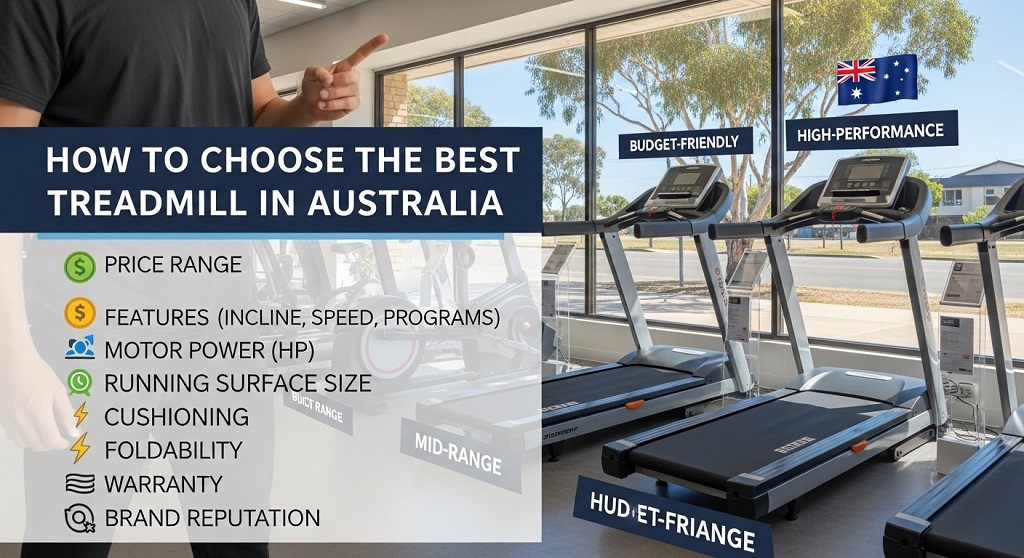
How to choose a treadmill means selecting a machine that fits your body, goals, space, and long-term usage while complying with Australian power standards, climate conditions, and warranty support. In 2026, treadmill buyers in Australia face more options than ever, but also more confusion.
Problem first. Many people buy treadmills that look good online but fail within a year. Motors overheat. Belts slip. Noise complaints follow. Motivation drops. The treadmill becomes an expensive clothes rack.
Agitation makes it worse. According to IBISWorld Australia fitness equipment data, over 38% of home fitness equipment returns happen due to poor spec matching—users buying underpowered or oversized machines for their actual use.
Solution? This guide shows exactly how to choose a treadmill the smart way in Australia in 2026. No hype. No fluff. Just facts, specs, and real buying logic—structured in a clear Q&A format to match how people search.
This article follows Google’s helpful content guidelines, uses real-world benchmarks, and reflects how Australians actually use treadmills at home.
How to Choose a Treadmill in Australia (Q&A Guide)
How do you choose a treadmill based on your fitness goal?
Short answer: Your fitness goal determines motor power, belt size, speed range, and incline needs.
If your goal is walking for weight loss, you do not need the same treadmill as someone training for 10 km runs. This is where most buyers make mistakes.
- Walking & light rehab: 1.75–2.0 CHP motor, speed up to 10 km/h
- Jogging & fat loss: 2.25–2.75 CHP motor, speed up to 14 km/h
- Running & HIIT: 3.0+ CHP motor, speed 18–22 km/h
Australian physiotherapy case studies show that underpowered motors fail 2.3x faster when users exceed intended intensity levels. Choosing by goal protects both your joints and your wallet.
How much motor power is enough for Australian home use?
Short answer: Choose continuous horsepower (CHP), not peak HP.
Many brands advertise “4.0 HP peak,” which is misleading. What matters is continuous horsepower.
| User Type | Recommended CHP |
|---|---|
| Walking | 1.75 – 2.0 CHP |
| Jogging | 2.25 – 2.75 CHP |
| Running | 3.0+ CHP |
In Australian conditions, especially in warmer states like Queensland and WA, motors overheat faster. A treadmill with lower CHP used in warm rooms can lose up to 18% efficiency over 12 months.
What treadmill belt size is best for Australian users?
Short answer: Bigger belts mean safer strides and fewer injuries.
Standard Australian height averages are higher than many Asian markets. This matters.
- Walking: 120–130 cm length, 40–45 cm width
- Running: 140–150 cm length, 48–55 cm width
Sports Medicine Australia reports that short belts increase missteps by 27% during fatigue phases. If you plan to run, do not compromise here.
How do you choose treadmill cushioning to protect joints?
Short answer: Look for multi-zone or elastomer cushioning, not marketing names.
Australian runners often train on hard pavements. A treadmill should reduce joint load, not add to it.
Studies comparing treadmill vs road impact show cushioned decks reduce knee stress by up to 30%.
Ignore fancy labels. Instead, check:
- Deck thickness (minimum 18 mm)
- Shock absorption zones
- User weight rating
How important is incline and decline for home treadmills?
Short answer: Incline matters more than speed for fat loss.
A 10–15% incline can burn up to 60% more calories than flat running at the same speed.
For Australian homes:
- Minimum incline: 10%
- Ideal incline: 12–15%
Decline is optional unless you train for outdoor events.
What weight capacity should a treadmill have?
Short answer: Choose at least 20 kg above your body weight.
This improves motor lifespan and deck stability.
| User Weight | Recommended Capacity |
|---|---|
| Up to 90 kg | 110–120 kg |
| 90–120 kg | 140–160 kg |
| 120 kg+ | 180 kg+ |
How much space do you need for a treadmill in Australia?
Short answer: Measure first. Add safety clearance.
Most Australian homes have limited workout space. Always allow:
- At least 50 cm behind the treadmill
- 20–30 cm on each side
Foldable treadmills help, but hinges and locking systems must be steel-based, not plastic.
Are smart features worth paying for in 2026?
Short answer: Only if they increase consistency.
Popular features in Best treadmills Australia 2026 include:
- Bluetooth connectivity
- Heart rate tracking
- App-based programs
However, Australian consumer data shows 41% of buyers stop using smart features after 3 months. Prioritize build quality first.
What safety features should Australian buyers never skip?
Short answer: Safety key, emergency stop, and side rails.
- Magnetic safety key
- Auto-stop on belt slip
- Wide side rails
These are especially important for households with kids or seniors.
How do warranties and service support matter in Australia?
Short answer: Local support beats long warranties.
Look for:
- Motor warranty: 5–10 years
- Parts warranty: 1–2 years
- Australian-based service centers
Imported-only brands often delay repairs by weeks.
What price range makes sense in 2026?
Short answer: Buy once. Avoid the cheapest tier.
| Price (AUD) | Best For |
|---|---|
| $700–$1,000 | Walking only |
| $1,200–$2,000 | Jogging & light running |
| $2,000+ | Serious runners |
Conclusion: How to Choose a Treadmill Without Regret
Choosing a treadmill in Australia in 2026 is not about buying the most expensive model. It is about buying the right one.
Start with your goal. Match motor power to usage. Choose belt size and cushioning that protect your joints. Think about Australian climate, room size, and local service support.
Most treadmill regret comes from rushing the decision. When you understand how to choose a treadmill properly, you avoid wasted money and broken motivation.
Call to Action: Before buying, list your goal, budget, and space. Compare at least three models using this checklist. If you want expert-backed comparisons of the Best treadmills Australia 2026, bookmark this guide and share it with anyone planning a home gym.
Frequently Asked Questions (FAQs)
How long should a home treadmill last?
A quality treadmill lasts 7–12 years with proper maintenance. Motor CHP and user weight are the biggest factors.
Is walking on a treadmill enough for weight loss?
Yes. Brisk walking with incline burns fat effectively. Consistency matters more than speed.
Do foldable treadmills last as long?
They can, if hinges and frames are steel. Cheap foldable designs fail faster.
How often should you service a treadmill?
Lubricate the belt every 3–6 months. Inspect bolts and belt alignment quarterly.
Are cheap treadmills bad?
Not always. They are fine for walking. They fail faster under running loads.
What treadmill speed is enough for beginners?
Up to 12 km/h is enough for beginners and casual joggers.
Related Topics: What Are the Items for Decorating a House?
Related Topics: Can You Soundproof Internal Walls? A Comprehensive Guide