

Starting your first DIY project feels exciting right up until you realize one tool could sand, carve, polish, cut, clean, and engrave—if you pick the right one. Beginners often buy a bulky, high-powered rotary tool, then struggle with control, over-sanding, or accessory confusion. You can avoid that frustration by choosing a compact, low-intimidation option that still handles real tasks.
If you want a beginner-friendly pick that focuses on portability and simple handling, this small rotary tool for beginners deserves a close look—especially if you plan to do light DIY, crafts, touch-ups, and detail work without setting up a full workstation.
Who the HARDELL 4V fits best
The HARDELL 4V cordless rotary tool fits you best if you value control, convenience, and quick “grab-and-go” use over raw power. It targets the learning phase where you build skills: how to hold a rotary tool steady, how to choose accessories, and how to avoid burning or gouging a surface.
Based on widely accepted industry standards, beginners improve faster when they practice on a tool that feels stable in the hand and keeps speeds manageable. This model’s compact form factor supports that goal because it encourages a lighter touch and better visibility.
You likely fall into the ideal user group if you want to:
- Sand small wood pieces, edges, or tight corners
- Polish metal, plastic, resin, or acrylic
- Engrave or etch simple designs
- Do basic DIY clean-up, deburring, and touch-ups
- Work away from an outlet (garage, balcony, craft table, or outdoor area)

What “4V” really means for beginners
Many first-time buyers assume voltage tells the whole story. Voltage matters, but beginner results depend more on control, accessory choice, and technique.
A 4V class rotary tool typically aims for:
- Lightweight handling and reduced fatigue
- Safer learning curve compared with higher-power tools
- Best performance on light-duty materials and smaller contact areas
According to industry experts, rotary tools cause most beginner mistakes through excessive pressure, not insufficient motor output. A smaller cordless unit nudges you toward proper technique: let the accessory do the work, keep the tool moving, and control heat buildup with speed and contact time.
HARDELL 4V overview: what you get and what to expect
Design and portability
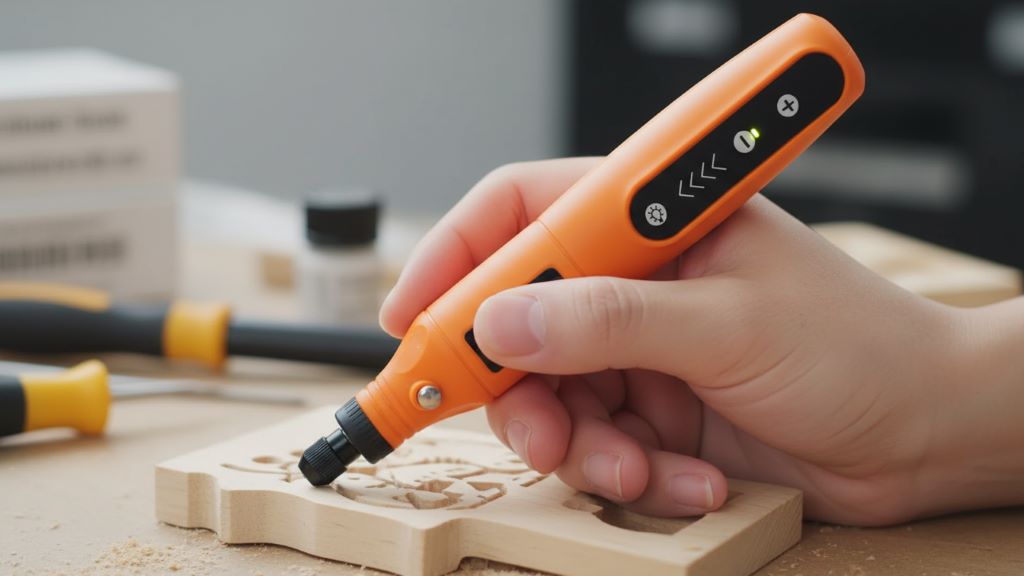
This tool focuses on portability first. The body usually feels pen-like rather than drill-like, which helps with detail work such as engraving, light sanding, or polishing. You also gain flexibility because you can work in cramped spaces without managing a cord.
As recommended by professionals who teach basic tool skills, beginners often produce cleaner lines and smoother finishes when the grip encourages a “writing posture.” A compact rotary tool supports that posture better than a larger, heavier unit.
Speed control and why it matters
Beginner success rises when you match speed to material. Soft materials can melt or smear at high speed, while harder materials may require higher RPM plus the correct accessory.
A portable rotary tool in this class commonly offers multiple speed settings rather than an ultra-wide dial range. That design choice helps new users avoid “accidental max speed” and makes repeatable results easier.
Use these practical pairings as a starting point (adjust based on your accessory and material response):
- Lower speed: light cleaning, gentle polishing, buffing plastics
- Medium speed: sanding wood edges, deburring soft metal
- Higher speed: engraving, cutting with appropriate wheels, metal brushing (light duty)
Based on manufacturer guidelines for rotary accessories in general, you should start slow, test on scrap, then increase speed only until the accessory cuts or finishes cleanly.
Battery and charging convenience
Cordless tools win on convenience, but they must recharge easily or they become “drawer tools.” The HARDELL 4V category commonly supports USB charging, which fits how most people actually work today: near a laptop, power bank, or phone charger.
To keep battery performance consistent, follow widely accepted industry standards:
- Recharge before the battery fully drains when possible
- Store at moderate temperatures
- Avoid leaving the tool in hot cars or direct sun
Noise, vibration, and control
Beginners often quit early because vibration makes detail work stressful. Compact rotary tools often reduce fatigue simply because they weigh less and encourage lighter pressure.
According to industry experts, vibration control improves most through three habits:
- Use sharp, appropriate accessories (worn accessories chatter)
- Keep the accessory straight and seated properly
- Hold the tool close to the tip for fine work (without blocking airflow)
What the HARDELL 4V does well (beginner wins)
1) It encourages correct technique
A smaller cordless rotary tool pushes you to work with a light touch. That single factor helps you avoid the most common beginner errors: gouges in wood, melted plastic edges, and burn marks.
You’ll learn faster when you practice these fundamentals:
- Keep the tool moving to avoid heat spots
- Let the accessory contact lightly and steadily
- Use multiple passes instead of forcing one heavy pass
2) It makes setup almost effortless
You can pick it up, attach an accessory, and start a quick task without extension cords or bench setups. That ease matters because skill-building depends on repetition, and repetition depends on convenience.
3) It handles common home-and-craft tasks reliably
For typical beginner projects—small sanding, polishing, light engraving, and cleanup—this tool class shines. You can refine edges, shine metals, and remove small burrs without hauling out heavier tools.
Related:
Five key macrame tools for all skill levels
Conquer the Cleaning Chaos: Top Tools and Gadgets for an Effortless Interior Sparkle
Where the HARDELL 4V feels limited (honest drawbacks)
You should also know what this tool will not replace. A compact 4V unit usually won’t behave like a full-size, higher-voltage rotary tool when you push into heavy cuts or long continuous grinding.
Expect limitations in areas like:
- Deep cutting in thick material (slow progress, higher heat risk)
- Large-area material removal (takes longer)
- Extended heavy pressure grinding (can stall or drain battery faster)
According to widely accepted industry standards, you should switch to a higher-power rotary tool or a dedicated tool (like an oscillating tool, die grinder, or angle grinder) when the job demands sustained torque or aggressive removal.
Best beginner projects to try (with actionable steps)
The fastest way to feel confident involves small projects that reward control rather than power.
Project 1: Smooth a rough wood edge
- Mark the rough edge with a pencil so you see progress clearly
- Start with a sanding drum or sanding band
- Use light pressure and short passes along the grain direction
- Switch to a finer grit for a cleaner finish
- Wipe dust, then check the edge with your fingertips
Pro tip (based on professional finishing practices): your fingers detect unevenness faster than your eyes.
Project 2: Polish a dull metal item
- Clean the surface first (oil and grit ruin polishing results)
- Use a felt or polishing accessory with a small amount of compound
- Keep the tool moving to avoid streaks and heat
- Buff lightly and inspect under angled light
According to industry experts, most “bad polish” comes from skipping cleaning or using too much compound.
Project 3: Engrave a simple label
- Tape a printed guide or draw your letters lightly
- Practice on scrap first to learn depth control
- Use a fine engraving bit and start at a lower speed
- Trace slowly, then deepen lines with a second pass
As recommended by professionals, you should treat engraving like drawing—smooth motion beats pressure.
Project 4: Clean rust spots or residue (light duty)
- Wear eye protection and a mask (fine particles travel)
- Choose a brush or abrasive appropriate for the surface
- Use low-to-medium speed and a light touch
- Stop often and wipe away debris to check progress
Based on manufacturer guidelines for abrasive accessories, you should avoid digging the brush into corners at steep angles because it can kick and scratch.
Accessory basics: what beginners should know first
Rotary tools feel confusing because accessories look similar but behave very differently. You’ll get better results when you categorize accessories by job type.
Use this quick mapping:
- Sanding drums/bands: shaping, smoothing wood and some plastics
- Grinding stones: sharpening and shaping certain materials (use gently)
- Felt/buffing: polishing and shine work
- Cutting wheels: thin cuts (use correct wheel type and guard practices)
- Wire brushes: cleaning and light rust removal (watch for flying bristles)
- Engraving bits: detail marking and etching
According to widely accepted industry standards, you should replace accessories once they glaze, clog, or wobble. Worn accessories reduce control and increase heat.
Safety checklist that actually prevents beginner mistakes
A rotary tool looks small, but it can still throw debris and snag edges quickly. Professionals train beginners on consistent habits, not “common sense,” because habits prevent accidents.
Use this checklist every time:
- Wear safety glasses (non-negotiable)
- Tie back hair and avoid loose sleeves
- Hold small parts with a clamp, not your fingers
- Start at low speed and ramp up gradually
- Keep the accessory perpendicular unless the task requires an angle
- Stop before changing accessories (never “quick swap” while spinning)
Based on manufacturer guidelines, you should also inspect accessories for cracks or warping before use—especially cutting wheels.
How to get cleaner results (technique upgrades)
Small technique changes create big quality improvements.
Control heat to avoid melting and burn marks
Heat builds from friction plus pressure. You control heat with speed selection, lighter contact, and frequent pauses.
Use multiple passes instead of force
You’ll get straighter edges and fewer slips when you “sneak up” on the final shape.
Stabilize your hands
Use one of these stabilizing methods:
- Brace your forearms on the table
- Hold the tool like a pen and anchor your pinky on the surface
- Use two hands: one guides, one stabilizes the rear
According to professionals, stability matters more than strength for detail work.
Maintenance: keep it beginner-simple
You don’t need complex maintenance, but you do need consistency.
Do these routines:
- Wipe dust off the body and vents after each session
- Store accessories in a small organizer so you don’t bend shafts
- Recharge regularly and store in a dry place
- Replace worn sanding bands and buffing pads promptly
Based on widely accepted industry standards, clean accessories and proper storage extend tool life and improve results more than any “hack.”
Buying advice: how to decide if this tool matches your needs
Choose the HARDELL 4V style tool if you prioritize learning, portability, and light-duty versatility. If you already know you’ll cut thick materials, grind for long periods, or remove lots of stock, you should step up to a stronger class of tool.
Before you buy, answer these questions honestly:
- Will you use it for detail work more than heavy removal?
- Do you need cordless convenience for where you work?
- Do you prefer simpler speed steps over a wide dial?
- Will you practice on small projects first?
According to industry experts, the “best” first rotary tool always matches the beginner’s project scale, not their ambition.
FAQs
Is the HARDELL 4V powerful enough for a first rotary tool?
Yes for light-duty work like sanding edges, polishing, engraving, and cleanup. You should choose a stronger tool if you plan heavy cutting or extended grinding sessions.
Can a beginner use a rotary tool safely?
Yes, if you follow consistent safety habits. Wear eye protection, clamp small parts, start at a low speed, and avoid heavy pressure.
What materials work best with a compact cordless rotary tool?
It performs best on wood, plastics (with careful heat control), soft metals for deburring, and surface polishing/cleaning tasks. It works less efficiently on thick steel cutting or aggressive grinding.
What speed should I use as a beginner?
Start low, then increase until the accessory works smoothly. Based on manufacturer guidelines, you should test on scrap first because material type and accessory condition change the best speed.
Why does my accessory wobble?
You may have seated it crooked, left it loose, or used a bent/worn accessory. Tighten properly, reseat, and replace damaged parts to restore control.
Can I use it for pet nail grinding?
Many beginners use compact rotary tools for that, but you must use the right grinding attachment, keep sessions short, and avoid heat buildup. As recommended by professionals, you should introduce the tool gradually to reduce stress and keep a styptic product available.
How do I avoid melting plastic while sanding or cutting?
Use a lower speed, use lighter pressure, and keep the accessory moving. Pause often to let the material cool.
What’s the biggest beginner mistake with rotary tools?
Applying too much pressure. According to industry experts, pressure causes most slips, burns, melted edges, and premature accessory wear.
Conclusion: should beginners buy the HARDELL 4V?
If you want a portable rotary tool that helps you learn control, builds confidence quickly, and handles the everyday detail work that beginners actually do, the HARDELL 4V fits the job well. It rewards good technique, stays convenient to use, and suits crafts, touch-ups, and light DIY without demanding a full workshop setup.
If your projects stay small-to-medium and detail-oriented, this tool can become your go-to for quick fixes and finishing work. Pick a simple starter project this week—smooth a wood edge, polish a metal item, or engrave a label—and start building skill through repetition.
If you want an easy-to-handle cordless rotary tool for beginner projects, consider the HARDELL 4V and start practicing on scrap today.