

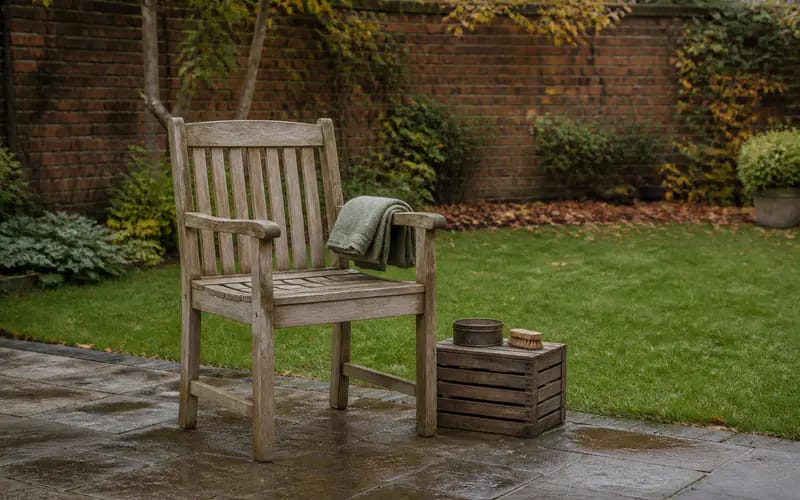
Your garden furniture can suffer great damage in a British winter – the greater part of this occurring before the ground freezes. However, by spending a little time now, you will be able to enjoy your garden furniture next year, rather than finding that your garden furniture has suffered serious damage while stored over the winter.
Clean Everything Thoroughly First
Dirt, pollen and algae can form on surfaces of your garden furniture throughout the year. This can form into small clumps of ‘matter’ and hold moisture against the surface of your furniture. Mould and mildew will grow over winter from this moisture. Clean all furniture before you store it away for the winter to try and prevent this from happening.
Treat Wood and Metal Before Packing
Once furniture has fully dried, treat any wooden items with teak oil or a suitable alternative to protect from drying out and cracking whilst in storage. Metal items should be treated with a rust inhibitor or alternatively a light coating of car wax to all joints and screw points. This will protect the items from any moisture entering and seizing up in storage. For further advice on the specific care of different garden furniture materials, see Which? advice on caring for different garden furniture materials.
Take Apart What You Can
Parasols, bench backs, table legs, arms etc all that can be unbolted should be taken apart before storage. Not only does this save a lot of space but also takes the strain off all the joints and hinges that would otherwise be left under considerable pressure for long periods of time. Damage can occur within a few months and be noticeable the following year with items feeling loose or even cracking.
Bag Cushions and Fabric Separately
Cushions, parasol covers and other garden furniture fabric items will need to be stored in separate, breathable storage bags, such as old cotton laundry bags, pillowcases or special garden storage bags. This will stop damp moisture in the fabric from turning to mildew in the unheated space over winter. Do not store cushions or covers in sealed plastic bags as this will trap any remaining damp in the fabric. If cushions feel damp to touch, leave them to dry out for a day or so before storing. More on Self Storage Dudley can be found at Anchor Self Storage Dudley.
Stack With Weight in Mind
Weight is worth keeping in mind when storing your garden furniture in a garage, shed or other outbuilding, such as a loft. It’s all too easy for other, heavier items to be piled on top of glass topped tables or rattan items. If storing furniture that is made of rattan in a garage or shed ensure that items of solid construction such as chairs are not stacked on top of them. Always store the heaviest and most solid items at the bottom of stacks. Glass items should be stored upright and separated from other furniture to prevent them from being damaged.
Cover Pieces Even Indoors
Dust and scuff marks can be more than just unsightly marks on your outdoor furniture when it is stored in your shed or garage for the winter months. They can also hide damage and be more difficult to clean than you might think. This is why it is a good idea to cover your outdoor furniture with a furniture cover or a dust sheet. In addition to protecting your furniture from damage, these items of covering can also make it easier to spot any signs of damp.
Consider a Storage Unit If Space Is Tight
Not all gardens have the space to store furniture over winter. Also many sheds are not dry enough to store furniture over winter. A garage may be used to store bikes, tools and cars. Storing your garden furniture in a short term storage unit for the winter could be the answer. Anchor Self Storage Dudley has a range of storage units to store from 2 chairs to a full patio of furniture. No long term contract is required.
If you get it all stored away in dry weather, you should be able to pull everything out again next spring in pretty much the same condition as when it went in.