
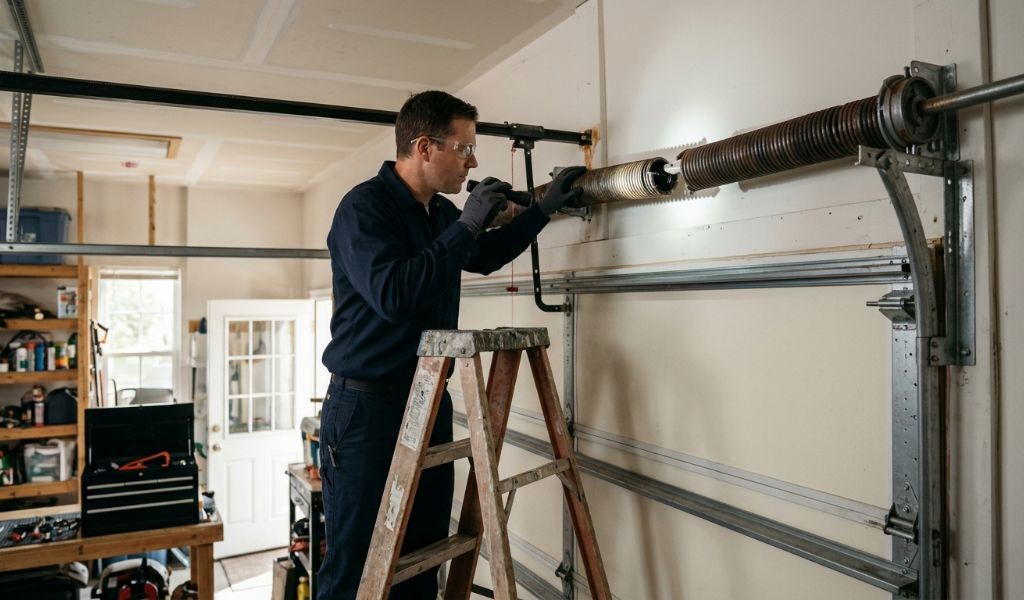
Most homeowners pay between $150 and $500 for professional garage door spring repair. Torsion springs usually cost more than extension springs because of the specialized tools and labor time involved. Prices climb higher when both springs need replacing or when additional hardware has worn out.
Few home repairs arrive as suddenly as a broken garage door spring. One moment the door opens smoothly, and the next it refuses to budge after a loud bang from the garage. Because this repair involves stored mechanical tension, pricing depends on far more than just the part itself. This guide breaks down what drives garage door spring repair cost up or down, so you can spot a fair quote and avoid overpaying for emergency service.
Average Garage Door Spring Repair Cost
Nationwide, a basic single-spring repair typically falls between $150 and $350, including parts and labor. A full pair replacement, which most technicians recommend regardless of which spring broke, often runs between $200 and $600. Premium, high-cycle springs built for heavier or larger doors can push the total toward $700 or more.
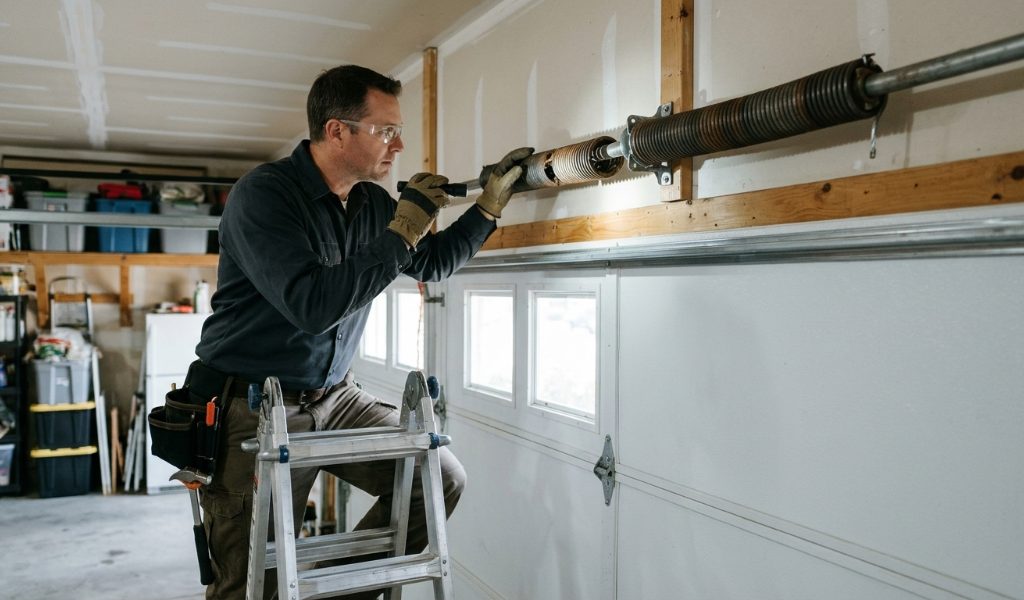
Labor alone usually accounts for a significant share of the bill. Certified technicians charge roughly $60 to $150 per hour, and a standard spring job takes between one and three hours depending on door size and access. As a result, even a relatively inexpensive spring can come with a labor-heavy invoice.
Cost By Spring Type
The type of spring mounted above your door plays the biggest role in determining price. Each system requires different tools, different safety procedures, and different amounts of technician time.
Torsion Spring Repair Cost
Torsion springs typically cost more to replace because of the precision required to wind them to the correct tension. A single torsion spring replacement generally runs $150 to $350, while replacing a matched pair often lands between $250 and $600. Heavier doors or custom sizing can push costs toward the higher end of that range.
Extension Spring Repair Cost
Extension springs tend to be the more budget-friendly option. A pair replacement, including the required safety cables, usually costs between $120 and $350. However, older homes with harder-to-access extension systems sometimes see labor costs creep upward.
What Drives The Price Up Or Down
Several variables shape the final invoice beyond the spring itself. Door size matters significantly, since wider or taller doors need stronger, more expensive springs to handle the added weight. Material also factors in, as heavier wood or insulated steel doors require higher-rated springs than lightweight aluminum.
Local labor rates shift pricing by region, with metro areas typically running 15 to 25 percent higher than rural markets. Emergency or same-day service often adds a premium, particularly for calls made evenings, weekends, or holidays. Meanwhile, the cycle rating of the chosen spring affects cost too, since higher-rated springs last longer but carry a higher upfront price.
Regional Price Differences
Where you live can shift your garage door spring repair cost noticeably. Homeowners in large metro areas often pay 15 to 25 percent more than those in rural towns, mostly due to higher technician wages and overhead. Climate also plays a role, since regions with harsh winters or heavy humidity tend to see faster spring corrosion and more frequent replacements.
Travel distance affects pricing too, particularly for homes in remote areas far from a company’s service hub. Some providers add a trip charge for jobs outside their normal coverage zone. Comparing quotes from at least two local companies helps you spot whether a price reflects fair regional rates or an inflated emergency markup.
Repair Versus Full Replacement
Technicians generally cannot repair a broken spring in the traditional sense. Once a spring snaps or loses its temper, replacement becomes the only safe option. However, the term “repair” still applies broadly to the overall service call, which may include more than just the spring itself.
If cables, pulleys, or the center bearing plate show wear during inspection, replacing them in the same visit often costs less than scheduling a separate appointment later. A full spring system upgrade, which swaps in higher-capacity springs and refreshed hardware, typically runs between $400 and $1,000. This option makes sense for older doors approaching the end of multiple components’ lifespan at once.
Hidden Costs To Watch For
A low advertised price does not always reflect the final bill. Ask upfront whether the quote includes both springs or just the broken one, since replacing only one often leads to a second failure soon after. Confirm whether safety cables, new end bearings, or roller replacements are included or billed separately.
Some companies charge a trip fee or diagnostic fee on top of the repair cost, particularly for emergency calls. Additionally, damaged tracks or drums discovered during the repair can add 10 to 40 percent to the original estimate. Asking for a written, itemized quote before work begins helps avoid surprises on the final invoice.
Opener strain is another cost many homeowners overlook. Running a motor against a broken or weakened spring can shorten its lifespan considerably, sometimes leading to a separate opener repair bill. Mentioning any recent strange noises from the opener during your spring repair appointment lets the technician check both systems in one visit, which often costs less than two separate service calls.
DIY Savings Versus Real Risk
Buying a spring and attempting the swap yourself might seem like an easy way to cut costs. A replacement torsion spring alone typically costs $30 to $100, which looks appealing next to a $300 professional invoice. However, the savings come with a serious tradeoff in physical risk.
Garage door springs store enough energy to lift a 200-plus pound door thousands of times over their lifespan. Without the correct winding bars and technique, that stored energy can cause severe injuries, including broken bones and deep lacerations. Professional installation also usually includes a warranty, which a DIY repair cannot match if the spring fails again shortly after installation.
For most homeowners, the modest savings rarely justify the added danger and the lack of any guarantee. Spending slightly more on a licensed technician typically delivers a safer, longer-lasting result.
How To Get A Fair Quote
Start by calling at least two or three local companies for pricing before booking a repair. Ask each one whether they quote flat-rate pricing or hourly labor, since flat-rate quotes tend to be more predictable. Request confirmation that the quote covers both springs, safety inspection, and any necessary hardware.
Check for licensing, insurance, and online reviews before scheduling, since an unqualified installer can cost more in the long run through repeat failures. Many companies also offer bundled maintenance plans that include periodic spring inspections at a reduced rate. Scheduling that kind of preventive check can lower your long-term garage door spring repair cost by catching wear before it becomes an emergency.
It also helps to ask how long the warranty lasts and exactly what it covers. Some companies only warranty the spring itself, while others include labor if the part fails early. Clarifying this detail before work begins protects you from paying twice for the same repair within the first year.
Final Thoughts
Garage door spring repair cost varies widely based on spring type, door size, and local labor rates, but most homeowners can expect to pay between $150 and $600 for a standard job. Understanding what drives that price helps you compare quotes with confidence instead of guessing. A slightly higher upfront cost for quality parts and a proper warranty usually pays off over the life of the door.
Ready to get your garage door working safely again? Request quotes from licensed local technicians today and compare pricing before scheduling your repair.
Frequently Asked Questions
How much does garage door spring repair cost on average?
Most homeowners pay between $150 and $500 for professional repair, depending on spring type and door size.
Is it cheaper to replace one spring or both?
Replacing just one spring looks cheaper upfront, but most technicians recommend replacing both to avoid a second failure soon after.
Does homeowners insurance cover garage door spring repair?
Standard policies rarely cover spring replacement, since it falls under normal wear and tear rather than sudden accidental damage.
Why do torsion springs cost more than extension springs?
Torsion springs require specialized winding tools and more precise tension calculations, which increases both labor time and risk.
Can I lower my garage door spring repair cost with maintenance?
Yes, regular lubrication and annual inspections catch wear early, often preventing the higher cost of an emergency repair call.