
Paint or Stain for Shaker Doors
Most people choosing to put Shaker Doors in their kitchen or wardrobe will first decide whether they want the doors painted or stained. Both finishes look excellent on well-made Shaker Frames but in daily use each finish behaves differently.
The Look Each Finish Gives
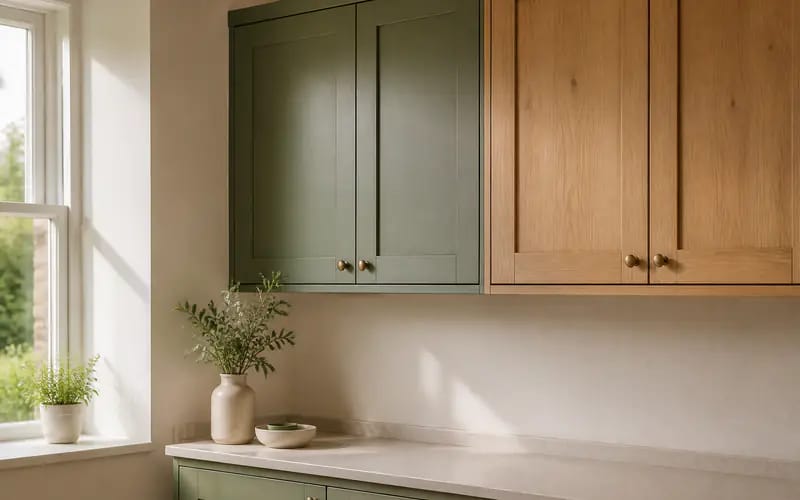
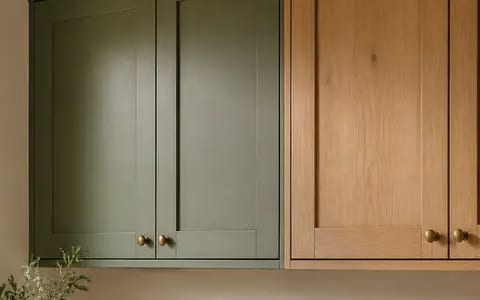
Painted doors produce a smooth even surface which clearly demonstrates the frame and panel of a Shaker door. The shadow lines within the recessed panel of a simple design such as this are highlighted creating a very modern look which works well in most simple kitchens and kitchens with a modern wardrobe. Stain on the other hand shows the natural grain of the wood and because no two pieces of wood are exactly the same each door will look slightly different.
Which Door Materials Suit Each Finish
Solid wood or a wood veneered MDF door blank will take paint well as the paint forms an even layer on top of the material. Stain is a different story and is best used on solid timber or a genuine wood veneer. This is because the stain is soaking into the wood grain, so any characteristics of the wood such as knots or colour variation show up well. Stained MDF looks unimpressive and washed out, therefore painted is the best finish for Shaker Doors made from MDF to achieve a wood like look.
Durability and Everyday Wear
On a daily basis, painted doors are most likely to suffer damage to the edges, for example to the area near the handle, to the corners where they come into contact with the work surfaces, and to finger prints in the recessed panel areas. Stained wood doors are less likely to suffer damage in the form of scuffs and light scratches as these will blend into the natural grain and colour variations of the stained wood. Therefore a busy household with children, dogs and a lot of cooking are likely to be better suited to stained wood doors.
Maintenance and Touch-Ups
The patching up of painted doors for slight damage is easy to do with a small amount of paint and a fine brush. However, a small amount of damage to a stained door can look very out of place when compared to the rest of the surface of the door. In order to achieve a good patch up on a stained surface the entire door or even just the panel will have to be repainted.
Moisture and Heat Near Sinks and Hobs
Doors close to sinks, hobs and radiators are exposed to more moisture, heat and spills than any other area of your kitchen. Therefore it is especially important to apply a hard-wearing lacquer to painted doors and to apply a tougher sealant to stained doors. Time must also be allowed for the finish to fully cure before the doors are put into use. Heritage building advice regarding breathable paints and oil-based stains and their ability to allow for any movement in the wood and deal with any dampness, highlights the importance of allowing sufficient time for curing and the selection of the correct sealers.
Cost Differences Between the Two
Spraying paint forms a part of the process that includes the application of primer, multiple layers of paint and a final layer of lacquer. As with any process of this nature, there is a large element of cost created by the time spent by skilled laborers. When compared with a process for applying stain and a sealant, the lab costs are greatly increased due to the multi-stage process required. The use of stain on solid timber materials can actually be cost-effective in terms of labour, should you be trying to save a few pounds.
Resale and Longevity of Style
Painted Shaker Doors are versatile and will work well with a wide range of kitchen and wardrobe designs. Painted doors are perfect for a neutral colour such as off-white, sage or grey, which will blend with most worktops, flooring and kitchen hardware. A stained finish on the other hand creates a unique design that ties in with a particular wood tone such as warm oak or dark walnut. If you are planning to be in your home for the next decade or so, paint offers flexibility for changing other aspects of the kitchen while keeping the doors.
A Practical Decision Checklist
It is always worth ordering a couple of sample boards and spraying them with the paint or applying the stain before you decide on a finish. You need to check how the finish looks in your own home, with the lighting that you have and at different times of the day. It’s also worth checking with the material that your doors are made from to see if it can be finished the way that you want. This is one of the biggest areas for disappointment. Lastly, consider how your household will wear the finish and how easy it will be to touch up any marks or scratches in 5 years time.
Both painted and stained doors can look wonderful on well-made Shaker doors. The key to selecting the best finish for your new doors is to consider how you live in your home, the material of your doors and how much maintenance you are prepared to do to keep your doors looking their best.