
Your roof works all year, but its enemies change with the weather. Winter brings snow and ice. Spring brings rain and storms. Summer bakes the shingles, and fall dumps leaves into every gutter. However, most homeowners only look up when water drips from the ceiling. By then, as building and renovation experts at newhouseproject.com/ warn, a small hidden problem has already grown into an expensive disaster. According to the National Roofing Contractors Association, a well-maintained roof lasts far longer than a neglected one, and regular checks catch damage while repairs stay cheap. Therefore, a seasonal routine is the smartest way to protect both your home and your budget. In this post, you will find a clear checklist for each season of the year. Follow it, and your roof will thank you with decades of quiet, reliable service. Read on, because a few hours per season beats a major repair every time.
Key Takeaways
- Inspect your roof twice a year, in spring and fall, at minimum.
- Clean gutters after leaves fall and again before spring rains.
- Winter risks include ice dams, which push water under shingles.
- Summer heat cracks shingles and softens sealant, so check venting.
- Trim overhanging branches before storm season, not after damage.
- Photograph your roof yearly to document its condition for insurance.
Spring Checklist: Recover From Winter and Prepare for Rain
Winter leaves marks on your roof, even in mild climates. Snow, ice, and freeze-thaw cycles loosen shingles and crack sealant. Therefore, spring is your reset season. Walk the checklist below once the weather warms.
- Inspect the roof from the ground with binoculars for missing or lifted shingles.
- Check the attic for water stains, daylight, or damp insulation.
- Clean out all gutters and downspouts clogged by winter debris.
- Examine flashing around the chimney and vents for cracks or lifting.
- Look for cracked or split sealant at vent boots and roof edges.
- Schedule a professional inspection if winter was harsh or the roof is aging.
Start with the shingles. Winter winds often loosen shingles without removing them. Therefore, look for tabs that sit higher than their neighbors. Additionally, check the valleys where two roof slopes meet, because snow and ice collect there first. Damaged valleys leak quickly in spring rain.
Next, move to the attic. This step is free and reveals hidden leaks early. On a bright day, turn off the attic light and look for pinpricks of daylight. Additionally, press your palm against the insulation and feel for cold damp spots. Stains on the rafters map past leaks precisely.
Gutters deserve real attention now. Spring rains arrive fast, and clogged gutters push water back under the shingles. Additionally, standing water in gutters adds weight that pulls them loose from the fascia. Consequently, a half hour of cleaning prevents the most common leak in the book.
Finally, handle any moss or algae growth you find. Moss holds moisture against the shingles and shortens their life. However, never scrape hard or power wash the roof, because both destroy the granule layer. Instead, apply a gentle roof cleaner and let rain rinse it away.
Summer Checklist: Guard Against Heat and Sun Damage
Summer seems harmless to roofs, but heat is a quiet destroyer. Sunlight bakes shingles, and high attic heat ages them from below. According to the Asphalt Roofing Manufacturers Association, proper attic ventilation is one of the biggest factors in shingle life, because trapped heat cooks the roof from underneath. Therefore, summer maintenance focuses on heat, ventilation, and small repairs.
- Check the attic temperature and ventilation on a hot afternoon.
- Inspect shingles for curling, cracking, or bald spots where granules washed away.
- Look at the caulking and sealant, because heat makes it shrink and split.
- Check for pests like birds, wasps, or squirrels nesting under eaves.
- Clean the gutters once more if trees overhang the house.
- Plan and book any repairs now, because autumn gets busy.
Ventilation is the summer star. A hot attic can reach 60°C and forces heat down through the roof deck. Consequently, shingles curl and sealants dry out years early. Check that ridge vents and soffit vents are open and unblocked by insulation. Additionally, if your attic feels like an oven, ask a roofer about adding venting. The improvement pays for itself through longer shingle life and lower cooling bills.
Granule loss is the other key sign. Shingles wear out as their protective granules wash away. Look at your gutters and downspout outlets after summer storms. A heavy pile of sandy granules means the shingles are aging fast. Additionally, dark bald patches on the roof show where the layer is gone. Therefore, note these spots and mention them to a roofer before fall.
Summer is also the best time for repairs. Roofers have lighter schedules, the days are long, and sealants cure perfectly in warm weather. Consequently, book any work from your spring inspection now instead of waiting for the autumn rush.
Finally, check for summer pests. Birds and squirrels tear at vent screens and gap flashing, and wasps build nests in quiet corners. Therefore, walk the perimeter once in July and look for activity under the eaves. Small holes become leaks fast when autumn rain arrives.
Fall Checklist: Clear Debris Before the Cold Arrives
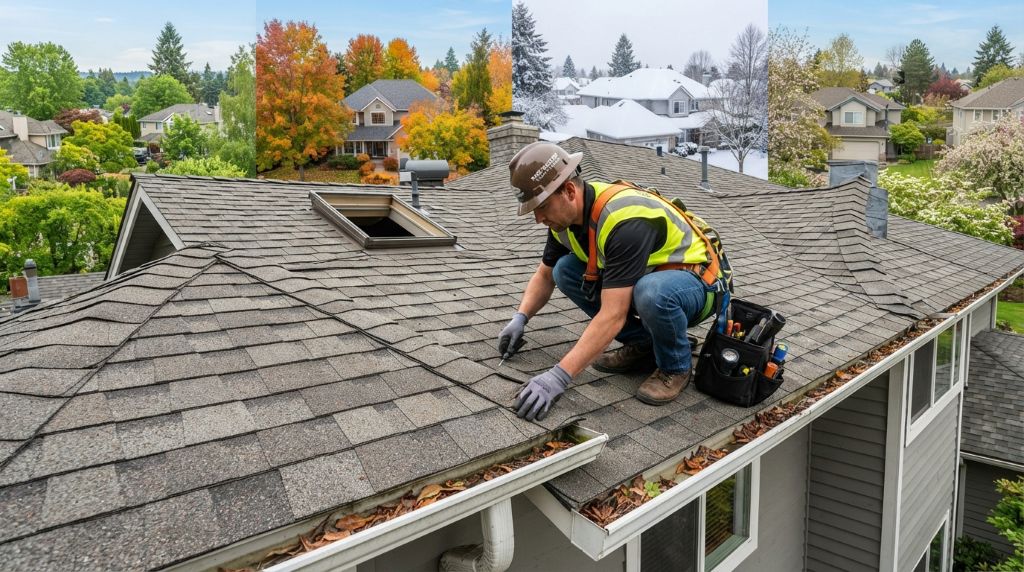
Fall is the most important season for roof care. The reason is simple. Everything you miss now gets locked under snow or soaked by winter rain. Therefore, treat this checklist as your main annual deep clean.
- Clean every gutter and downspout after the leaves finish falling.
- Flush gutters with a hose and confirm water flows freely out of the downspouts.
- Trim all tree branches that hang over or near the roofline.
- Remove leaves, pine needles, and debris from the roof itself.
- Inspect flashing and sealant one more time before winter.
- Remove any tree branches or fruit that fell onto the roof over the year.
Gutter cleaning is the top fall task. Clogged gutters in winter cause ice dams, which push melting snow back under the shingles. Additionally, gutters full of wet leaves freeze solid and tear away from the house. Consequently, clean them after the last leaves drop, usually late in the season, not at the first color change.
Trees get equal priority. Branches that scrape the roof in ordinary wind will break in winter storms. Additionally, dead limbs snap under snow weight and puncture shingles. Therefore, trim everything back now while climbing conditions are still safe and dry.
Debris on the roof itself matters too. Leaves collect in valleys and behind chimneys, where they hold moisture like a sponge. Additionally, decomposing debris becomes soil, and soil grows moss and weeds. Consequently, a roof sweep after leaf fall stops a chain of slow damage.
Also, do one last flashing and sealant check. Everything you seal now survives winter without leaking. Additionally, look at the chimney mortar, because freeze-thaw cycles turn small cracks into fallen bricks. Therefore, fall is the last comfortable chance for repairs.
Winter Checklist: Watch for Ice Dams and Snow Load
Winter roof care is about watching, not working. Danger days are not the time for ladder climbing. However, small habits from inside and from the ground keep you ahead of trouble all season long.
- Watch the roofline for ice dams, which are thick ice ridges at the eaves.
- Keep gutters and downspouts open, so melting snow drains away.
- Check attic ceilings and top-floor ceilings for new water stains.
- Knock down large icicles forming at the eaves and entryways.
- Use a roof rake to remove heavy snow after big storms, from the ground only.
- Note any sagging or creaking sounds and call a professional right away.
Ice dams are winter’s biggest roof threat. They form when a warm attic melts snow on the roof, and the meltwater refreezes at the cold eaves. That ice ridge blocks later meltwater, which backs up under the shingles and into your home. The Insurance Institute for Business and Home Safety notes that ice dams cause significant water damage each winter. Therefore, if you see thick ice at your eaves, your attic likely runs too warm. Improving insulation and ventilation fixes the root cause.
Ceiling checks are your early warning system. After every major snow or thaw, look at the top-floor ceilings for fresh stains. Additionally, check the attic for frost on the roof boards, because frost means warm moist air leaks into the attic and melts snow unevenly. Consequently, catching a stain early means a small repair instead of a gutted room.
Snow load matters too, especially after back-to-back storms. Most roofs handle snow fine, but very deep, wet snow adds tons of weight. Therefore, use a roof rake from the ground after major dumps and never climb up to shovel. Additionally, keep large icicles over doorways broken off before they grow heavy and fall on someone.
Finally, keep emergency numbers ready. A trusted roofer’s contact info saves panic during the first leak. Winter damage cannot always be prevented, but fast response keeps every problem small.
Conclusion
Roof care is not one big job. It is four small ones, spread across the year. Spring repairs winter’s damage. Summer checks ventilation and books repairs. Fall clears debris and trims trees. Winter watches for ice and stains. Additionally, photographing the roof each season builds an insurance record that pays off when storms hit. Keeping up with these seasonal tasks can also help you spot affordable repair needs early, especially when you know how to repair your roof on a budget without compromising quality.
Therefore, start this weekend. Put all four checklists into your phone calendar with seasonal reminders. Then handle the next task on the list before its season slips away. Your roof protects everything you own, so give it one hour per season and it will protect you back for decades.
FAQs
How often should a roof be inspected?
Inspect twice a year, in spring and fall, plus after major storms. Additionally, a professional inspection every few years catches hidden wear. Consequently, small problems stay small.
What is the most important seasonal roof task?
Cleaning gutters in fall is the single highest-impact job. It prevents ice dams and the most common leaks. Therefore, never skip it, even if the roof looks fine.
Can I do roof maintenance myself?
Yes, for ground-level and attic tasks like binocular checks, gutter cleaning, and stain hunting. However, hire professionals for steep climbs, flashing work, and chimney repairs. Safety beats savings.
How long does an asphalt shingle roof last?
Most last 20 to 25 years with good care. However, poor ventilation and neglect can cut that to 15 years. Consequently, maintenance directly extends your roof’s life.
What does a professional roof inspection cost?
Most inspections cost between 125 and 300 dollars, and some companies waive the fee for customers. It is far cheaper than one emergency leak repair. Therefore, book one before storm season.