
Phoenix summers place extreme pressure on household appliances. According to weather data, temperatures often exceed 100°F for weeks at a time, while some areas experience highs above 110°F during peak summer months. These conditions can affect refrigerator performance in ways many homeowners do not expect. In some cases, a refrigerator compressor starts then stops, creating repeated clicking sounds that signal an underlying problem. Understanding why refrigerators keep clicking off during summer in Phoenix, AZ homes can help prevent food spoilage, costly repairs, and unexpected appliance failures.
Why Clicking Sounds Become More Common During Phoenix Summers
Most refrigerators make occasional clicking sounds during normal operation. However, frequent clicking followed by shutdowns often points to a performance issue. Summer heat creates conditions that push refrigeration systems beyond their normal workload. As a result, components may cycle off to protect themselves from damage.
Outdoor temperatures influence indoor appliance performance more than many people realize. Even in air-conditioned homes, kitchens often become warmer during summer afternoons. Refrigerators must remove heat continuously to maintain safe food storage temperatures. Consequently, the compressor may experience additional strain throughout the day.
Many homeowners focus only on cooling performance. Yet clicking sounds usually provide an early warning sign before complete failure occurs. Addressing the issue early often prevents larger repair bills. Therefore, understanding the root cause becomes especially important in Phoenix homes.
Overheated Compressors Frequently Trigger Protective Shutdowns
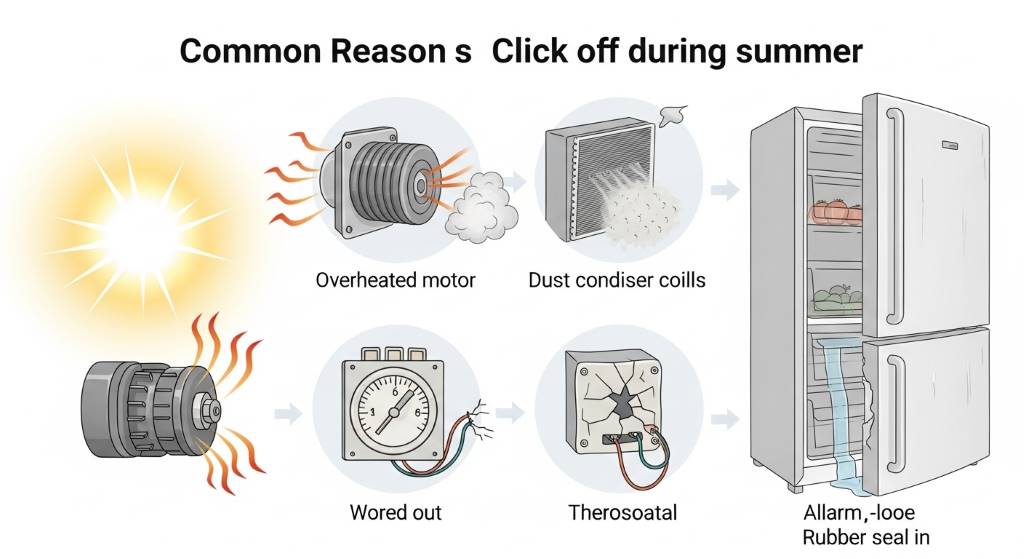
The compressor acts as the heart of the refrigeration system. During Phoenix summers, this component works harder and runs longer than usual. Excessive heat can raise internal temperatures beyond safe operating limits. Consequently, built-in protection mechanisms shut the compressor off temporarily.
Restricted airflow often worsens the problem significantly. Dust buildup behind the appliance traps heat around critical components. Homeowners who ignore maintenance may also notice reduced efficiency over time. Learning how refrigerator door dents got you down and other physical issues affect performance can also help identify hidden efficiency losses.
Once the compressor cools, it attempts to restart. This process creates the familiar clicking sound many homeowners hear repeatedly. If overheating continues, the cycle repeats throughout the day. Eventually, prolonged stress may damage the compressor permanently.
Signs of Compressor Overheating
- Repeated clicking every few minutes
- Warm food compartments
- Excessively hot refrigerator sides
- Long cooling cycles
- Unexpected shutdowns during hot afternoons
Faulty Start Relays Struggle More in High Temperatures
The start relay helps the compressor begin each cooling cycle. When this small component weakens, summer heat often exposes the problem quickly. Higher temperatures increase electrical resistance within aging parts. Therefore, startup failures become more common.
A failing relay usually produces a click without successful compressor operation. The refrigerator attempts to start, fails, and tries again later. Meanwhile, interior temperatures gradually rise. This pattern often becomes more noticeable during the hottest months of the year.
Many homeowners mistake relay problems for compressor failure. Fortunately, relays cost far less to replace. Professional diagnosis helps determine the actual cause. Early inspection may save hundreds of dollars in repair expenses.
Poor Airflow Around the Refrigerator Creates Hidden Problems
Many Phoenix homeowners place refrigerators close to walls or cabinetry. While this arrangement saves space, it can reduce ventilation significantly. Refrigerators need room to release heat generated during operation. Without adequate airflow, temperatures around the appliance increase rapidly.
Blocked condenser coils make the situation even worse. Dust, pet hair, and debris reduce heat transfer efficiency. Regular maintenance remains essential for reliable cooling performance. Similarly, understanding topics like does a fridge water filter remove fluoride encourages homeowners to pay closer attention to overall refrigerator maintenance.
Phoenix homes often accumulate dust faster because of dry conditions. Consequently, condenser coils require more frequent cleaning than in many other regions. A simple cleaning routine can improve efficiency noticeably. Moreover, it helps reduce compressor stress during extreme heat waves.
Electrical Voltage Fluctuations Can Cause Repeated Clicking
Summer electricity demand rises sharply throughout Phoenix neighborhoods. Air conditioners, pool pumps, and other appliances place heavy loads on local electrical systems. These conditions occasionally contribute to voltage fluctuations. As a result, refrigerators may struggle to start properly.
Low voltage prevents the compressor from receiving adequate power. The start relay clicks repeatedly as the system attempts to operate. Meanwhile, cooling performance declines steadily. Homeowners sometimes notice lights dimming during these events.
Using a dedicated outlet helps reduce some electrical issues. However, persistent voltage problems may require professional electrical inspection. Addressing power supply concerns protects not only the refrigerator but also other household electronics. Therefore, homeowners should not ignore recurring symptoms.
Extreme Kitchen Temperatures Increase Refrigerator Cycling
Kitchen temperatures often rise well above thermostat settings. Ovens, dishwashers, and direct sunlight contribute additional heat throughout the day. In Phoenix homes with large west-facing windows, afternoon heat gain becomes especially significant. Consequently, refrigerators work much harder to maintain safe temperatures.
Frequent cycling increases wear on electrical components and compressors. Each startup places stress on moving parts. Over time, weakened components may begin clicking off repeatedly. Therefore, controlling kitchen heat can improve appliance longevity.
Simple adjustments often make a meaningful difference. Closing blinds during peak sunlight hours helps reduce heat gain. Likewise, limiting oven use during the hottest part of the day can lower kitchen temperatures. These changes reduce refrigerator workload considerably.
An Overlooked Phoenix-Specific Issue: Superheated Garage Refrigerators
One rarely discussed cause involves refrigerators installed in garages. Many Phoenix homeowners use a second refrigerator for beverages, frozen food, or bulk storage. During summer, garage temperatures can exceed 120°F. These extreme conditions create unique operating challenges.
Most standard refrigerators are designed for controlled indoor environments. When exposed to excessive ambient heat, cooling systems struggle continuously. The compressor may shut down repeatedly to prevent damage. Consequently, clicking sounds become far more frequent.
This issue receives less attention than compressor or relay failures. Yet it affects many Phoenix households each summer. Relocating the appliance or improving garage insulation can often solve the problem. Therefore, homeowners should evaluate appliance placement carefully.
Dirty Condenser Coils Remain One of the Most Common Causes
Condenser coils release heat collected from inside the refrigerator. When dust covers these coils, heat cannot escape efficiently. The refrigeration system compensates by running longer cycles. Eventually, overheating may trigger repeated shutdowns.
Phoenix’s dry climate contributes heavily to dust accumulation. Homes near construction sites or desert areas face even greater challenges. Consequently, coil cleaning should become part of routine maintenance. Most manufacturers recommend periodic inspections throughout the year.
A coil brush or vacuum attachment usually handles basic cleaning tasks. Homeowners should always disconnect power before beginning maintenance. Professional cleaning may help when buildup becomes severe. In many cases, this simple step restores normal operation.
When Professional Service Becomes Necessary
Some refrigerator issues require expert diagnosis. Persistent clicking despite cleaning and ventilation improvements often indicates component failure. Compressors, relays, control boards, and electrical systems may need inspection. Therefore, homeowners should avoid prolonged delays.
Food safety concerns increase when cooling performance declines. Refrigerated foods can enter unsafe temperature ranges surprisingly quickly. Early repairs help prevent spoilage and unnecessary grocery expenses. Additionally, prompt service often prevents secondary damage.
Technicians use specialized tools to test electrical and refrigeration components accurately. This process identifies problems that homeowners cannot easily detect. Professional assessment also prevents unnecessary parts replacement. As a result, repairs become more efficient and cost-effective.
Practical Steps to Prevent Summer Refrigerator Shutdowns
Preventive maintenance remains the best defense against refrigerator problems. Small actions performed regularly can significantly reduce the risk of clicking shutdowns. Moreover, preventive care improves energy efficiency and appliance lifespan.
- Clean condenser coils every few months
- Maintain proper airflow around the appliance
- Check door seals for leaks
- Avoid overloading food compartments
- Keep kitchen temperatures as stable as possible
- Schedule professional inspections when symptoms appear
These steps require minimal time but deliver substantial benefits. Homeowners who follow a maintenance routine often experience fewer summer breakdowns. Furthermore, refrigerators operate more efficiently under extreme conditions. Consistent care ultimately protects both the appliance and household budget.
Conclusion
Understanding why refrigerators keep clicking off during summer in Phoenix, AZ homes helps homeowners respond before serious damage occurs. Overheated compressors, faulty relays, poor airflow, electrical issues, and extreme environmental conditions all contribute to the problem. Regular maintenance and timely inspections can prevent many common failures. If your refrigerator continues clicking or struggles to stay cold, review resources like why is my fridge warm and not cold and contact a qualified appliance technician for a professional evaluation before the issue worsens.
FAQs
Why does my refrigerator click and then stop running?
A faulty relay, overheating compressor, or electrical issue commonly causes this behavior.
Can Phoenix heat damage a refrigerator compressor?
Yes, prolonged exposure to extreme heat can increase compressor stress and shorten its lifespan.
How often should I clean refrigerator condenser coils in Phoenix?
Most homes benefit from coil cleaning every three to six months due to dust accumulation.
Is it normal for a garage refrigerator to struggle in summer?
Yes, excessive garage temperatures can overwhelm refrigerators not designed for extreme environments.
Should I call a technician if the clicking continues?
Yes, persistent clicking usually requires professional diagnosis to prevent further damage.